
What is it all about? It can be hard to tell at this time of year, even when the saviour of the world is embedded in the name of the holiday – Christmas; it can be hard to know what it is all about. Between the chaos of trying to get presents for family and friends, trying to find time to socialise and catch up with people who might be home for a few weeks, and often the increase in busyness in the places we work as either people invade the shops that we work in to try and find the perfect gift of a last minute turkey, or the office wants to get finished up before the quietness of the Christmas and New Year period. It can be so easy to wonder what it is all about. What should we be doing, thinking, or understanding this time of year? Christmas is the most beautiful time of year, but it can be the most confusing in terms of our discipleship and the message of the Christmas faith. It can also be a hard time of year for us with the pressure of presents, the nights, and the memories of joy shared with people who are no longer with us. A YouGov survey showed that 26% of people reported that Christmas affects their mental health negatively, especially among those who are unemployed (38%), Separated (35%), or have suffered a bereavement (31%).
Christmas is the most beautiful time of year, yet amid the busyness, parties, and presents, what might it mean for us to simplify it? What might it mean for us to cut away all the added layers, all the added gloss, to cut through the Adverts and cultural pressures of presents and work, and ask that Question not about the holiday, but about the very word that defines our language at this time of year as we wish people a Happy Christmas, as we hope that people have a Good Christmas? What is Christmas all about?
The reality is even when you turn to the Church for something of a Christmas message, it can be hard to know the point! Bishops and Archbishops realise some quasi-spiritual message that sounds more like a statement or greeting from a Prime Minister, someone whom God has called to teach the Fatih and make know the hope of Christ. They will reference the commonality of Jesus in the world, then quickly move on to current events and a general call for peace, reconciliation, respect and understanding among all faiths as the outworking of the Christmas message and the Christian hope. Church leaders sound like politicians with a vague reference to their Lord and Saviour and a greater focus on vague moral platitudes or references to civic community, duty and delight. Perhaps you might even stumble on to a Bishop moving from the manager to global affairs, as they spend more time discussing conflicts (as evil and desperate as they are) than Christ. If that is our starting point for discerning what Christmas is all about, it can make it even more confusing and challenging to try and assess and determine. So then, in simplicity, we must ask – What is Christmas all about?
We all Know the Scene
The set Gospel reading for Christmas Eve in the Anglican lectionary is Luke 1:26-38 where the Angel of the Lord appears before the unknown Mary, who has been chosen among all people to be the Mother of the Saviour of the world. It is the most surreal scene that displays how God will work in the world. He appears not to the mighty, powerful or well-known – nor does he announce to the King or those with a platform. Instead, the creator of the Universe appears to one whom he has created and placed in insignificance to tell something significant – the Coming of the long-awaited messiah into the world who would reconcile God’s chosen people and all people to Yahweh. There, the Angel announces the most significant news to the most unworthy recipients. Yet, in this act, the Angel shows us for whom God has come and how God will work in the world from that moment until the last day. What is it that the angel announces?
“You will conceive in your womb and bear a son, and you will name him Jesus. He will be great and called the Son of the Most High, and the Lord God will give him the throne of his ancestor David. He will reign over the house of Jacob forever, and of his kingdom, there will be no end.” – Luke 1:31-33
The messenger of the Lord appears to a servant of the Lord and declares that she will give birth to the one of whom the prophets spoke, the eternal king who will reign on the throne of God forever, and of his Kingdom, there will be no end. Thus, after the initial shock, Mary displays what faith looks like as with the help of the Holy Spirit, she responds to this great call of God in a way that models what every accurate response to the call and work of God in our lives must look like:
Then Mary said: ‘Here am I, the servant of the Lord; let it be with me according to your word.’ Then the angel departed from her.
Before all and in All, may Mary be our model of faith, commitment and response to the call of the Lord in our lives and this world. If only more of our Church leaders would respond in the same way, with the same recognition of the authority in which God speaks. In our lives, as witnesses, and in the Church, we must always let it be according to the word of God. So, is our question answered? What is Christmas all about? The establishment of the Throne of David forever and the Kingdom of heaven? Well yes! Yet, those are big ideas, which, without thinking through, we might miss the point. When we ask that question, our reading from Romans helps us to understand some of the implications of what the messenger of the Lord revealed to Mary. Romans 16 helps us to understand something of What Christmas is all About.
Romans 16:25-27 CSB
Now to him who can strengthen you according to my gospel and the proclamation about Jesus Christ, according to the revelation of the mystery kept silent for long ages 26 but now revealed and made known through the prophetic Scriptures, according to the command of the eternal God to advance the obedience of faith among all the Gentiles- 27 to the only wise God, through Jesus Christ-to he be the glory forever! Amen.
What it’s All About
At the end of one of his great theological works, Paul closes with the most beautiful doxologies and summaries of the hope and beauty of the Gospel. It is a long and somewhat meandering Doxology (A form of words containing an inscription of Praise to God). It is a closing statement of all that Paul’s Letter to the Church in Rome has sought to explain, teach and correct. In it, we see three implications of what Christmas is all about and what it should mean for our lives, as well as witnessing and worshipping God.
- Christmas is all about the Gospel, the proclamation about Jesus.
- At Christmas, this Gospel must be central to our life and Worship in every season because it strengthens and produces active faith.
- Christmas is all about the Glory of God (through Jesus Christ)
1. Christmas is All About the Gospel (Romans 16:25)
It seems so simple to say, so obvious to believe that it almost should not need to be pointed out. Yet, in age where the Church is in decline and looking for a gimmick or prop to draw people back into the building, 16% of Ministers in the Church of England could be described as Agnostic, and 2% respond to a survey saying they do not believe in God; where Bishops have cast doubt on the reality and historicity of the resurrection of Jesus, and where some actively promote not just false teachings or distorted views of the person and work of Jesus, but other religions entirely – simple seems altogether necessary.1 In our moment, in our city, simplicity is wholly required. What is Christmas all about? It is all about the Gospel and understanding that the Gospel is the proclamation of Jesus (Who he is, Why he Came, What he has done and its implications).
Christmas is the moment that Gospel telling began as the Angel came to Mary and told her all the Good News about what God would do in the world through his son. The Gospel is Good News. CS Lewis captured just how significant the manager moment was for the world when he pondered: “Once in our world, a stable had something in it that was bigger than our whole world.” Thus, we must never lose sight of the Good News of God Emmanuel. The Gospel is the Good news of the Life, ministry, death, and resurrection of Jesus – and that Good news began in the manger. Thus, as we celebrate Christmas this year and every year, we can never lose sight of the fact that the God-child in the manger is a Gospel image.
What the world needs above all else at this moment, and in every moment, is Churches that Grasp the wonder of the Gospel that began in a manger in Bethleman. A Church that understands the Gospel and seeks to live it out. Then, a Church that declares the Gospel every Christmas and in every season to the world that has been wearied by life and sin. Imagine if our social media streams were full of Gospel messages from Bishops and Church leaders rather than civic platitudes. Imagine if our Churches that were dying were more concerned with those who, in death, face life apart from Christ than the latest green trend; imagine if again across the world, and in our context across the Anglican Communion, our churches, ministers, deacons and bishops where zealous for the Gospel and in the Gospel – the Church and world would be a different place. As we are reminded in O Holy Night, the world was “in sin and error pining,” wasting away until our dear Saviour “appeared and the soul felt the worth” of the good news of Jesus.
What is Christmas all about? Christmas is all about the Gospel!
The last verse of The First Noel reiterates this: “Then let us all with one accord, sing praises to our heavenly Lord, who hath made heaven and earth of nought, And with His blood mankind hath bought.”
2 Embracing the Eternally Beautiful Gospel: Strengthening Our Faith and Worship Beyond Christmas (Romans 16:26)
If Christmas marks the beginning of the Good News of Jesus, then each time we gather as Church family on Sundays or throughout the week, each time we come to this time of year when we remember the coming of Emmanuel, God with us in the Manger – it is a gospel moment. Every moment in Church should be just that – A Gospel moment. Regardless of the time of year, service type or event – we should come desiring the Gospel and desire to belong to a Church defined by its Gospel proclamation, culture and life above all things. Everything in our communities should make known the Good News of Jesus and be transformed by the Good News of Jesus. Thus, in our gathering, we remember that it is never about how things are done or the way things are done – it is about the why things are done. And, if we are to be a Church that is faithful to the Lordship of Christ and his Kingdom commission, if we are to be disciples who, like Mary says: “May it be Lord according to your word,” if we are to model our life and witness on someone like John the Baptist, then we must be disciples and a Church family who are concerned primarily with and above all else – the proclamation of the good news of Jesus in word and deed where God has called us to be. We must be disciples who discern in the power of the Holy Spirit when the Gospel has been displaced and call on our ministers not to do things a certain way or the way things have been done before – but to be above all and through all a minister of the Good news of Jesus. We embrace the Eternally Beautiful Gospel at Christmas and in every season because this Good News message is being made known to all people “everywhere so that they too might believe and obey him.”
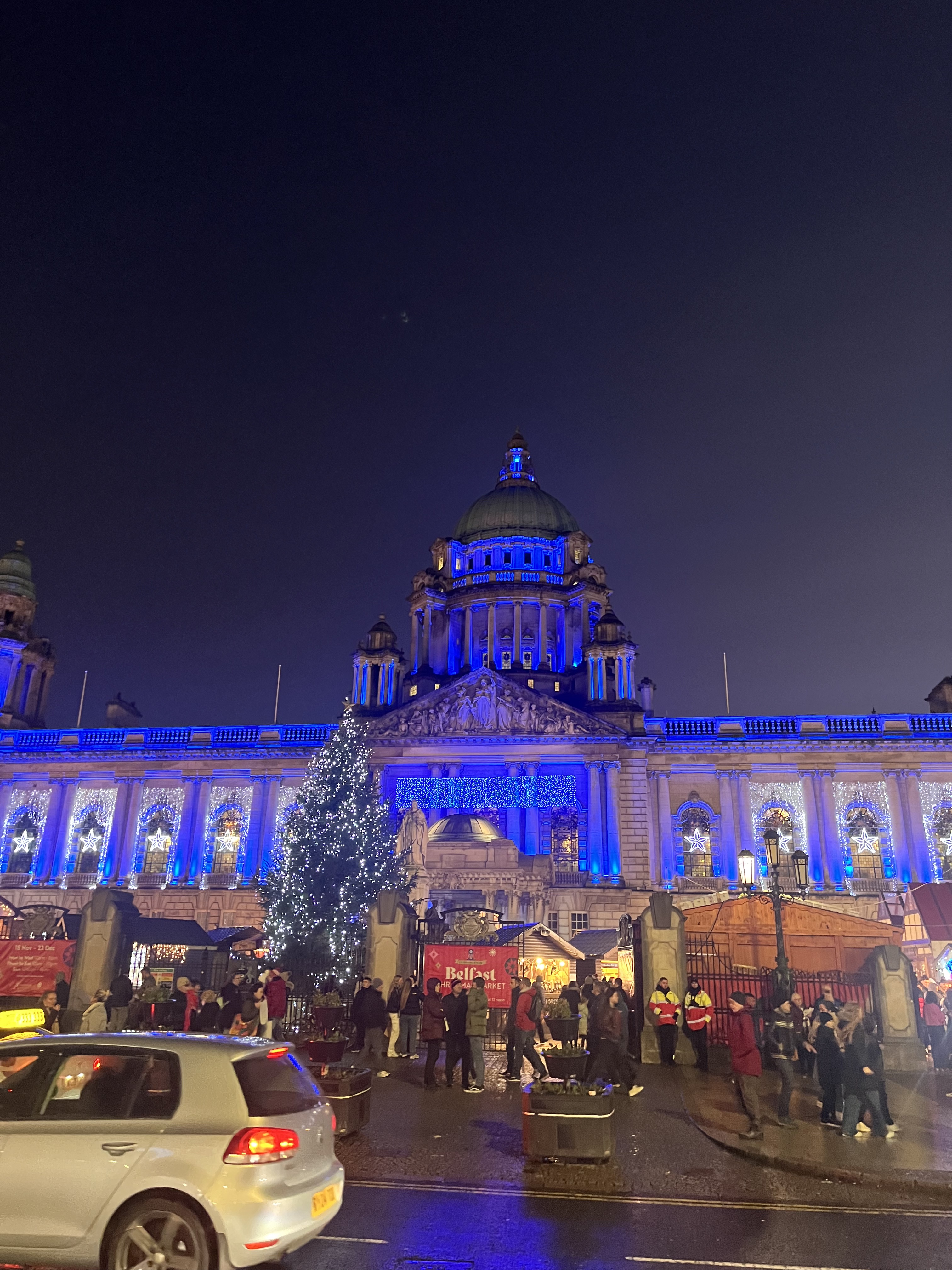
At Christmas, everything we do as a Church is about making the Good News of Jesus known, from the youngest to the oldest – we want everyone to encounter the Good News of Jesus through this familiar story because it is through this encounter that they will be saved eternally and transformed now, it is by everyone who comes into this Church coming into relationship with Jesus that this Church will be transformed and grow. Our part of Belfast will be touched with the light of Christ and the presence of God. When Churches are Gospel-centered and proclaiming, then cities are transformed. Thus, everything we do is to be Gospel-saturated and Gospel proclaiming whether it is our Nativity service, Community Carols, Christmas Day Worship, Tea and coffee after the service, or our conversations in the streets, we should be mindful of the good news of Jesus and the way Jesus has called us to live, and we must understand everything through this purpose and mission of the Church. Christmas is all about the Gospel, and our church’s life and rhythms must all be about the good news of Emmanuel in this season and into the year to Come. Being Gospel-centered is something we will look at over the coming months. At Christmas and throughout the year to come, we must delight in the Gospel and strengthen our faith and Worship beyond this season by growing in it and through it. It is the Good news of Jesus that the prophets and Scriptures foretold, that was incarnated in the manger and is made known today as we live in the Hope of Christ and live out the way of Christ with the help of the Holy Spirit so that others to can come to know this in which we delight. Our Delight and purpose is in the Good news of Jesus, as Joy to the World Exhorts us: “Let earth receive her King; let every heart prepare Him room.”
3 Christmas is all about the Glory of God (through Jesus Christ) (Romans 16:27)
I remember reading CS Lewis on the Psalms when he mentioned that he always struggled with how concerned God was with his own Glory and praise. That was until he realised that the Glory of God was good for all people. God is concerned with his own Glory and praise because it is in knowing His glory and praising him that people understand and find goodness. The Doxology at the end of Romans is a hymn of Praise to God because God deserves praise. Thus, after we have been reminded that Christmas is all about the Good news of Jesus and that we must embrace that Good news in every aspect of our living and worship as a community, we are reminded that finally, God brings Glory to himself forever through the good news of Jesus Christ. To reframe that sentence with a Christmas twist: God brings Glory to himself with the birth of Emmanuel in the Manger, the Worship of the Shepherd, and the wonder of the wise men at the God-child. Christmas is all about the Glory of God because the incarnation of the Son of God was the beginning of the revelation and knowledge of the Glory of God among Humankind. Christmas is about the Glory of God because it brings about profound change in the individual, the Church and the world and unveils the eternal greatness of God the Father. When we grasp that Christmas is all about the Glory of God when we grasp that the Gospel is a revelation of the Glory of God, we begin to understand what our sin is and how it separates us from God, why we need Emmanuel in the manger. So, like Paul encourages the Church in Rome to get on with making the good news of Jesus known in word and deed – to tell of his Glory – this Christmas, we must do the same! Make sure the wonder of Jesus is at the centre of everything we do and the motivation behind everything we are; we must tell of his Glory and worship him, as we are reminded in Hark the Herald Angels sing: “Christ, by highest Heaven adored; Christ the everlasting Lord; . . . Veiled in flesh the Godhead see, Hail the incarnate Deity.”
Conclusion

What is Christmas All about? Simple: (1) Christmas is about the Good News of Jesus and its proclamation to all who might hear. We want people to know and delight in what has saved us. (2) Christmas is about being renewed in the Story of the beginning of this Good news when Christ came into the world in humility to reconcile Man to God. Then as we are renewed in it at this time of year, we make it central to our life and Worship in every season because it strengthens and produces active faith. (3) Finally, Christmas is all about the Glory of God (through Jesus Christ) because the coming of Emmanuel was the beginning of the greatest revelation of God’s Glory and delight, and to know Christ is to delight in the beauty of his Glory. May we join with Paul in saying: to the only wise God, through Jesus Christ—to him be the glory forever! Amen,2 and may we join the Church of Christ in singing: “Come, adore on bended knee, Christ, the Lord, the new-born King.”
- https://www.independent.co.uk/news/uk/home-news/survey-finds-2-of-anglican-priests-are-not-believers-9821899.html ↩
- Christian Standard Bible (Nashville, TN: Holman Bible Publishers, 2020), Ro 16:27. ↩
 Atr Irwin