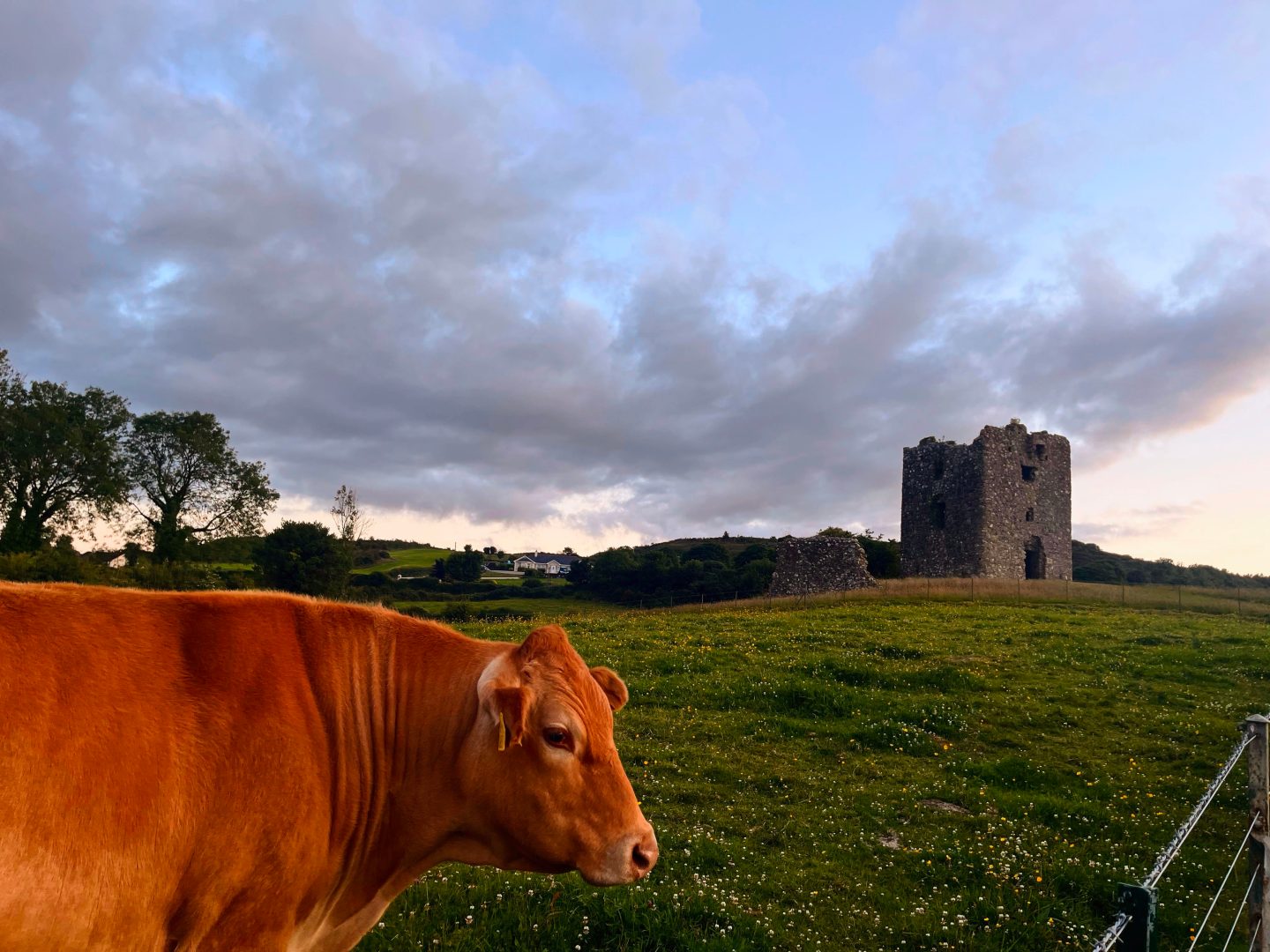
I am so thankful for my childhood; I am grateful that it was filled with beautiful memories with my wonderful family over the years. We lived a simple life. I went to school 10 minutes down the road, and every afternoon, I was picked up by either my Granny or Granda, as they took us down the road, past where we lived and onto the farm. It felt as much like home as my house during those early years because we were there so often. The smells, sounds, sights and scenes became a part of everyday life. I loved heading out to watch Grandpa or Dad work with the animals or on the land. My grandfather was a wonderful man who lived into his late 90s and was active until the end of his life.
Introduction: The Soil Matters
I have some very early childhood memories of us heading out into the field to harvest potatoes over the years to bring them during the summer months. Let me tell you, that was not easy work! We used to have this one field – the potato field – that took us a lifetime to get around and get the potatoes out of. I remember being thankful when Granda decided he no longer wanted to plant potatoes. Yet, every year, he still had his vegetable patch where he would grow all kinds of vegetables and then tend to them throughout the year, ensuring they would be ready when harvest came. Everything was planted in that patch, but most especially potato!
My Grandfather planted potatoes, and his father was before him. Potatoes have been planted on our land for generations; in fact, they have been planted across all of Ireland for hundreds of years by many families. Why? Because the potato seed would grow in almost any soil. It was a good seed that would produce a crop regardless of the size of the farm or the type of land the farmer had.
Yet, over the years, and with improvements in agricultural science, we began to understand that while the potato seed was excellent and versatile and could grow anywhere, the soil did matter. The better the soil, the better the crop, regardless of the goodness of the seed. Fruitfulness is as much about the soil as it is about the seed.
It is all about the Soil
In today’s passage, Jesus teaches using a familiar agricultural image for his dead. When the time comes, a farmer plants seeds to reap a harvest. Yet, as we consider this passage, one thing we have to keep constant in our minds is that this parable is not its namesake in the English Bible. Most of the Bibles we have will say above Mark 4:1-20 something along the lines of The Parable of the Seeds or the Parable of the Sower. True, they are a significant part of this earthly story, which has a heavenly meaning that Jesus is telling. Yet, for the listener, it is not a parable about the seeds or the sower because they are easily defined; the seeds are the gospel message or the truth of God going out, and the sower is God at work, ensuring his message goes everywhere. But the soil that receives it is distinct. So, as we consider this earthly story with a heavenly meaning, we must remember that the profound lesson and challenge in this earthly story with a heavenly meaning is in the soil.
A Story is Told | Mark 4:1-12
From the middle of Chapter 3 of Mark’s account of the life and ministry of Jesus, Jesus has been teaching and ministering to all who are coming to him. After 400 years of silence, the energy and excitement raised by the powerful and prophetic ministry of John the Baptist, there is a stirring around Jesus. People have heard about how he preaches, how he confronts the religious leaders and the hardness of their hearts, and people have heard about his power. You can imagine how the excitement has spread, as stories have been told from one person to another about something Jesus said or a miracle he performed. As it has passed from one mouth to another ear, it has become more and more extravagant. However, people have heard; whatever they have heard, they want to hear from Jesus. Thus, we see Jesus teaching to a crowd gathering.
Into the Boat (1-2)
So great is the crowd in number, and they are so eager for Jesus that as he begins to teach by the sea, he soon realises that he needs somewhere better to prepare. Thus, he beckons the boat to come to him, and in a moment of quick intelligence, Jesus seems to create something of a temporary pulpit, a floating lecture. The multitude of people and their desire was so great that it affected his ability to communicate the truths of the Kingdom of God clearly, so getting into the boat enables him to teach and, in a simple act, reminds us of his priorities. Many would have been there hoping to be healed and to have Jesus act in power towards them, but Jesus was there to make sure they heard the truth they needed to hear, the message of the Kingdom. He sits down in the boat and adapts the teaching posture, and on the rhythms of the wave, he begins to teach all these listening ears many things through parables.
Earthly Stories with heavenly truths are a gentle reminder to each of us about the importance of teaching the truths of God in a way that is appropriate to those who are listening. Jesus uses his day’s images, scenes, sights, and sounds to help people grasp the wonder of God’s work and the truths of his kingdom. Parables might be a challenge to consider in our approach to gaining knowledge of the hope of Christ in our time, place, and context.
The Farmer Sows the Seeds (3-9)
Mark tells us that Jesus teaches many things, such as the urgency of the moment and the priority of Jesus’ ministry. He knew why he had come: to see the message of the Kingdom, to call people to repentance so that as many as possible might hear the goodness of this New phase in the redemptive act of God. Yet, no sooner has Mark told us that Jesus taught them many things in parables than he had Jesus launch into his first lesson from the boat. What was the first lesson? The Parable of the Sower who seems to throw seed to whoever they will land. The importance of the first thing someone might say to us and the parable of the sower act is not just a lesson but the foundation of this chapter and section of Mark’s gospel.
Can you imagine the crowd’s attention being grasped by one word, “listen!” You can imagine the authority that Jesus must have had, the power of his preaching and teaching as it captured the ears and minds of those who had come to hear him. Perhaps, even as he swayed with the gentleness of the waves on the water and called for their attention, he may have seen someone sowing seeds in some fields nearby. As he asked the crowd to “consider the Sower,” you can imagine him pointing to something happening to hammer home his point. People think, “What about the sower?” (v4) Then the parable moves on, and we see that this sower is getting on with his work.
Seeds don’t belong on the Path (3-4)
He is not very good at sowing seeds because he seems to be throwing them everywhere (the people might think) as if they had fallen on the path. A Path where the soil was hard and the grown was corpse – because it had been well trodden – so the seed just lay there, and it served not to plant a crop but to feed the birds of the air. Quite graphically, Jesus tells us they devoured it. The Sower is generous with the seeds he throws; there is no scarceness in limiting his reach, and he makes sure every inch of where he walks through is covered. Whether it is the path he is walking on or the good soil to come, the sower seems to hope that regardless of the soil quality, it can receive the soil.
Rocky Ground: Rocky Roots (5-6)
As he moves forward, we see that the sower’s sowing has reached new ground. Still, his aim or logic does not seem very good, as he pelts seeds onto rocky ground. Again, the sower seems to desire to be generous, to make sure that every inch of this soil gets some attention from the seeds; even though it seems a poor choice, the rocky soil receives the same seeds as the Path before. Yet, while this soil fairs a little better than the Path, its fruitfulness is not much more, for it seems to have problems. Where the birds devoured before, now, because of the shallowness of the soil, the seeds sprouted quickly, but without the depths behind it, its roots could not go down. Thus, what may have looked like an incredible crop as it proliferated was soon discovered under the heat of the midday Sun. As the temperature went up and the moisture withdrew from the air, the crop lacked the roots to find the nutrition it needed to last, and as soon it grew, it withered. Like our funeral liturgies rhyme: “The sun went over it, and its place shall know it no more.” The rocky soil seemed to fare a little better in production than the path, but in the longer term, the seeds ended up with the same result under the day’s heat.
Thorns and Thistles (7)
The Sower seems to rush, and his arm never tyres of sowing. No sooner has he been sowing from the path and on the path to the Rocky ground than we are now given the image of him seeing Soil riddled with weeds, thorns, and thistles. To put it another way, the soil is already full of poor crops, yet the sower does not seem too concerned. With the same hopeful glee, he sows the seeds wherever he comes across; the seed goes wherever the sower wants it to go. This may be soil riddled with weeds, but the sower still seems hopeful as he throws the seed with hope. So we have the image of the seed falling among the thorns and weeds growing, yet it fared no better. The New Living Translation says, “thorns that grew up and choked out the tender plant so they produced no grain.” The sad thing was this was good soil, which could have been abundant in its harvest, yet weeds and thorns had already taken it over. Bad crops would take much from the soil and offer nothing back. The soil was good, but the weeds meant that anything that hoped the seed had was strangled to death, and from it, nothing came (MSG).
Finally Some Hope (8)
I wonder how the crowd received this parable as Jesus told it. Did they find themselves thinking – this is not a very good farmer? Why would he waste so much seed in such stupid places even if a child would not sow? I wonder if they grow in bemusement at every place the sower chooses to sow the seed. This is not a very good sower of seeds! Yet, finally, he seems to have stumbled across the excellent soil as we are told that “still others fell on fertile soil/good ground. The throw of the sower has finally arrived on the soil the seeds need, and what good soil it is! On the path the birds devoured and amid the rocks, there seemed to be some quick sprouting and growth until the world withered it away, and amid the weeds and the thorns, any potential for life was choked out before the growing could begin. Here on the good soil, the quality of the seed shines through as it fell on the good soil, sprouted and grew! Producing a crop that was 30, 60, and even a hundred times what the sower had hoped for. As Eugene Peterson phrases the end here: “Some fell on good earth and came up a flourish, producing a harvest exceeding his wildest dreams!” Finally, the sower had found the soil the seed needed. What happens when a quality seed meets quality soil? A quality crop! Abundant and fruitful beyond the expectations of the sower.
Listen Up! (9)
You can imagine the crowd’s ears listening as they pushed against one another to try and get closer to the boat. They must have been thinking to themselves, what? So, the sower has finally found some good soil! I wonder what will happen next. They waited and waited, and then as abruptly as he commanded their attention with the word listen he concluded with a challenge to their listening: “Let anyone who has ears to hear listen” It is a statement that is as blunt as it sounds, of course, everyone has ears. They have all come to listen, so what could he mean? It is, in a way, like when a parent asks a child, “Are you listening to me?” Ten minutes after they have asked them to do something. Jesus commands the crowd to listen; as he concludes, he wants to ensure they truly listen. The NLT phrases this sentence as anyone with ears to hear should listen and understand. JB Philips captures the bluntness of Jesus’ final statement as he translates it: Every man with ears should use them! What does Jesus mean? Well, he has finished teaching, and the point should be clear. The parable has made its point.
The Logic of Parables (10-12)
Eugene Peterson phrases Jesus’ statement in verse 9 as a challenge of Listening, “Are you listening to this? Listening?” Which the disciples were not! I wonder how Mark felt when he included moments like this in the Gospels, moments in which he was honest about how imperfect a disciple he was, and the other eleven. We are told in verse 10 that the men who have been with Jesus the most, who have heard him preach, seen him perform in power, and spent the most intimate time with him still do not have perfect ears! Simply put, they don’t know what he was on about. We are given an image of the twelve gathered with Jesus at the end of the day when one of them finally decides to break the awkward silence and ask him what he is talking about.
Mark is a man who wastes no time on details as he always tries to get to the main point, yet I often wonder at this moment if they start by asking him: “Why was the sower so bad at throwing seeds? Why did he waste so much? In verse 10, we see them asking, and in response, Jesus starts by explaining the logic behind his entire use of parables. Jesus’ answers summarise that he tells parables to reveal truths of the Kingdom to his followers. The parables were granted the mystery of the Kingdoms of God in the parables. What is essential for us to understand here is that it is not a mystery in how we know it. Mystery here means something true and was previously unrevealed, unseen. Jesus quotes from Isaiah 6:9-10 to show how his use of parables fulfils Scripture.
It may seem harsh, but there is an aspect of Judgement in Jesus’ use of parables as a teaching method. They are meant to be difficult because these are people who should recognise their meaning. Why? For generations, the people of God have been steeped in the word of God yet know nothing of the way of God, the heart of God, or the intended redemptive plan of God. Think about it: the crowds and religious leaders have all heard Jesus preaching and teaching about this coming Kingdom. They have just heard him preach about the Kingdom of heaven, the coming work of God and his call for people to repent, and they saw him act in power; and what did they do? They concluded that he was working by the power of Satan (Mark 3:22-30). That is, they heard him and saw it clearly and still rejected him, so now Jesu uses parables as a mode of judgment against their hard hearts and deaf ears. The quote from Isaiah 6 helps us to understand this. What is clear is that such individuals who cannot see God clearly will not receive the Grace that God offers, even when it is bluntly in front of their eyes; they would rather trust in themselves and earthly things. Parables are the means of testing because such hard hearts will no longer hear the truth plainly, but they will still receive snippets in seeds in the hope that they might respond.
The Meaning of the Story (13-20)
Jesus challenged the crowds to consider whether they were listening correctly to make sure they were considering the whole truth because that is why he came. Jesus explained to the disciples to help them grasp the fullness of his parable and its heavenly meaning, allowing them to see that it was not a tale about farming but about the goodness of God, the wonder of the Gospel, and the types of hearts there are in the world to receive it.
The Seed is the Word (13-14)
Jesus knew they did not understand the parable because they had just asked him about it. So when he asks them if they do not understand it, he is not asking as a rebuke but more of a device to begin teaching them. Yet, they would need to start to understand, to see the more profound meaning. If they could not get this one, how would they begin to understand the things of the Kingdom when the parables became deeper still? These lessons may have been Kingdom truths wrapped in Allegory and story for the crowd to wrestle with and see if they could discern, but they were also moments for the Disciples and all followers of Jesus to learn from. Hence, I think the NLT transition of verse 13 best captures the heart behind the question: “If you can’t understand the meaning of this parable, how will you understand all the other parables.” The answer? By the Grace of God in the Holy Spirit. God, by his Spirit, also brings life to us from his word.
Thus, to help them to understand, Jesus begins to explain. “The farmer plants seeds by taking God’s word to others.“ Why is the farmer so generous with his throwing of seeds? Because he wants to make sure everyone gets a chance to hear the word of God, the gospel of Grace, and the good news of Jesus Christ. Mark here calls it the work of God, Luke uses the term “word of the God” (Luke 8:11), and Matthew calls it the “word of the Kingdom.” (Matt 13:19) If we think of it in terms of Matthews language and preaching about the coming Kingdom of God and the call to repent, the word of the Kingdom refers to the message that Jesus has been preaching about how to enter into the Kingdom of God, as in the Scope of God’s Salvation. The seed that is the word is the Gospel of Salvation, and thus, the sower is generous where we sow it because the Lord wants all to come to know him, even as he knows many will reject him. In the four types of soul, we see four types of responses to the gospel of Grace. We see four types of human hearts; the question is which one is ours.
The Path(15)
Remember the first place where the farmer sowed, the ground he seemed to have been walking, well worn and pressed down. Nothing was complicated to take root, yet the farmer still sowed his seeds. What happened? No sooner had the seed of the Gospel hit the ground than had the birds of the air devoured them off the soil. The soil was not receptive to the seed, and this soil represents for us those who hear, and once they have listened to, they have no desire to understand (Matthew 13:18), and Satan comes and snatches this good news from their hearts. Why? Because they have already rejected and rejected the Good News, they have given their hearts over to other things. Satan’s coming is not an image of him being powerful enough to stop the work of God; instead, he only does in the soil what we allow him to do.
Rocky Ground (16-17)
The next soul seems more Hopeful as Jesus explains that the Rocky soil represents a heart that is somewhat open to the gospel’s good news. We are told, “They receive it with Joy immediately.” Think of the passion that overflows from some people the minute they encounter Jesus, and perhaps you think of someone who no sooner had they received this gospel of Grace than were seemingly back to their routine. The rocky soil represents the heart that can recognise the truth of God and the reality of who Jesus is, but there is nothing for it to take hold in, no depth in which for the yield to mature. There is lots of life, to begin with, as the crop proliferates because this is a good sed and there is life in it, but there is nothing to sustain the life, so like the crowd understands the heat of the midday sun, it withers. The reception of the Gospel is superficial, and change does not follow. The Good news of Jesus always received will bring change in the life of the believer and the church.
They have nowhere to root into this good news of God, so when the trials of life come, when the high ends and the normal that is the world and life sets back in – they fade. Why? Because they do not have roots! The Gospel is something that must be sustained and nourished in our lives. The good news of Jesus is not a one-time event that we come back to at the end of our life; it is the source of all life; as we receive it, we must allow it to root in our lives and shape all of our living because it is all the living we have been looking for. Otherwise, like the seed on rocky ground, we will fade with the time and trials of life.
Perhaps it might be worth praying and asking if we allow God’s word to take root in our lives. Are we giving ourselves time to nourish it with the rhythms of Grace God gives us, or is it withering under the weight of life?
Thorns that Destroy (18-19)
No sooner than we have been thinking about the rocky soil does Jesus Bring us to the next one. Remember the thorns? What do they represent? It always amazes me how many people I have encountered who come to church or will claim some Christian Identity. Still, when I could chat with them one-on-one and ask them if they have received the Grace of God, they respond by saying something along the lines of “not yet,” then they start to list off excuses of any busyness or disinterest. They know Jesus is Lord, but they want to have some “fun” first or do not have time for him. Do you know what the problem is when people come out with rubbish like that – they have been listening to other voices wondering who Jesus is, what life with him looks like, and what it means to be his disciple. The beauty of the word of God has been twisted by their giving of their ears over to other voices competing for their hearts and their soul.
Worse still, perhaps, they have heard the good news of the Gospel and weighted it up to be of some value or truth, yet found it crowded out by all the other worries of their life; they have considered it as something among the equal competitions of the world, rather than the source of all life, as their hearts are drawn by “the lure of wealth, and the desires of other things.” (19). They have allowed their ears to hear and their hearts to believe that what they seek can be found in the created things rather than by the creator.
Perhaps it might be worth praying and asking if we have recognised the unique value of the Gospel. It is not one voice among many, one thing to try among all the world’s tastes, but the source of life we seek. Or perhaps we have seen the gospel goodness but are still allowing ourselves to be lured away by things that do not bring life but only destruction.
Conclusion: Soil that Receives (20)
Much can be said about this parable and the lessons in the soil as we consider our lives and living in the world. As we consider how we approach the word of God and life with God, we ask if our hearts are truly receptive to the good news of God’s grace. Or, to put it another way, we ask: Are we producing fruit? The parable does not simply finish with condemnation; rather, there was one last type of soil remembered. Some seeds fell on good ground, growing up and producing excellent yields. AS Eugene Peterson said it “came up with a flourish, producing a harvest exceeding his wildest dreams.” Jesus tells us that soil represents those who hear the word and ” welcome it, and produce a fruit….” (20) So as we consider the soils, we consider the mark of the soil that has truly heard the Gospel – fruitfulness.
Notice that fruitfulness is not an optional extra; they seem to yield it. If God plants the seed and makes our hearts receptive to it, he will produce fruit from our lives because a heart that has encouraged Jesus and come before God in repentance should be transformed to life for Jesus and like Jesus. We begin to love the things Jesus loved, see the world the way Jesus saw it, and treat people the way Jesus treated them. The Cross is not just our hope but our ethic, so we become people who live cross-centred as we love and honour one another in the context of the family of faith: how we speak of one another, how we support one another, how we pray for one another inside this body of Christ, and then how we move out together to join in the mission of God in this area. All of those are overflows of our first reception of the Gospel and our continuing fruitfulness in the Gospel as the Holy Spirit works in us, as we live out the way of Christ for the Glory of God.
Think about this for the preacher, the Sunday School teacher, the bible study leader, or the house group hoster. The parable of the seed should encourage all who God uses to sow Gospel seeds because we see the farmer sow good seed, always knowing that it will not always produce fruit, and even when it did grow, it had a different level of yield and fruitfulness. It is our job to be faithful to the task we have been given in that role of sowing; we keep on preaching about Jesus or teaching about him in Sunday School, Bible study, and Small groups, and we keep on sharing about him as we are about and about in the normal of our day knowing that our job is only to be faithful to the task God has given us. We should make Jesus known in our everyday context, in the roles we serve, or in the places we exist in word and deed. Fruitfulness and Yields belong to the lord and are works of the Holy Spirt.
We don’t know what impact our labouring in Sunday School will have over the years or how our Gospel service might impact people when friends are in need, but we trust the one we are worshipping and serving to do his work. So, we should not be discouraged when we do not see the results from our faithfulness; it is God’s work in God’s time. When we talk with people, we must remember that there are different types of soil and different receptions to the seed. Yet, God is the one who can change the soil, clear out the thorns and keep the birds away. So we must be patient, take the Gospel opportunities that God brings before us, and be confident as we follow the leading of the Holy Spirit that God will open the minds of those with whom he is working so that their hearts can receive the seed of the Gospel that will become productive in its own time.
 Atr Irwin