Introduction
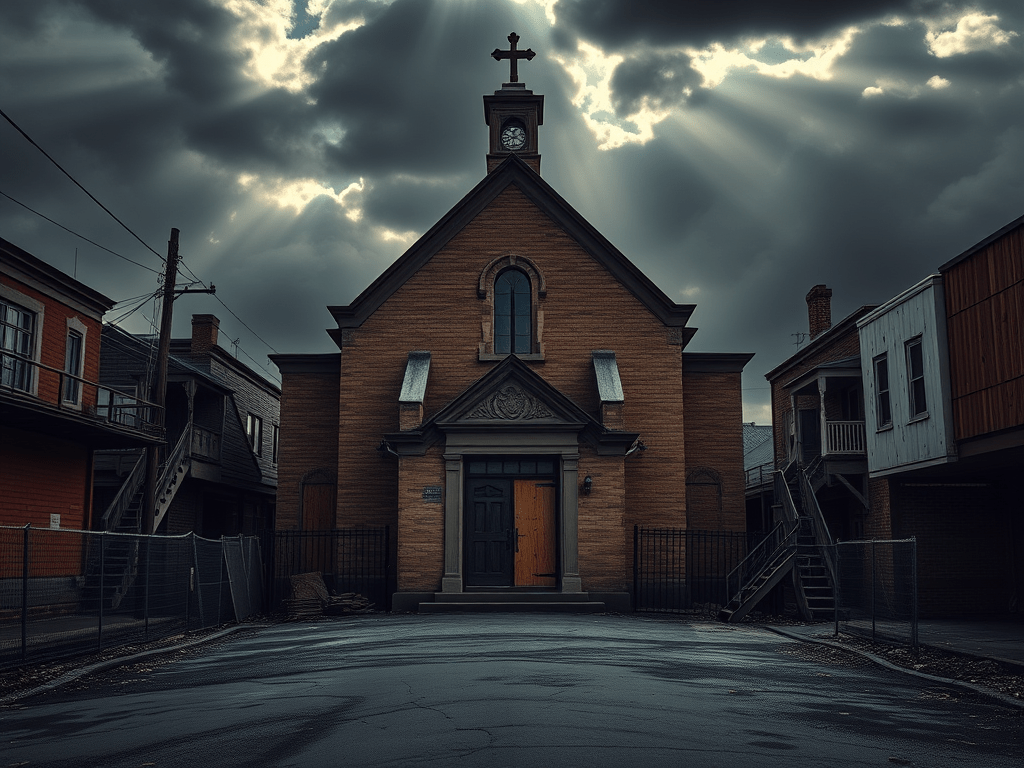
I wonder when the last time you walked our streets, and took time to see the unseen things. The people and places that seem to exist in the shadows of culture and busyness – yet they make up the life of the City, the soul of the City, and if we are honest, the people we are called to reach. Every City is marked by contrasts, and our City is no different, as it stumbles out of a troubled past and into a hopeful future, it stumbles forward while often leaving some bits behind. Our streets are littered with the unseen and unseeable, the people and places that the world wants to forget. The people are places that God sees, God loves, and God is calling us to reach. Places where the Church used to minister and shine the light and hope of Christ, and now our old church building lies empty, with its windows boarded up, gates locked, and life long forgotten. If some are lucky, they might be stores, or restaurants – yet most lie empty and in ruin – symbols of a decline of faith, a loss of hope, and a retreating church and a mission forgotten. Yet, while our streets are littered with abandoned Churches, they are not full of abandoned homes. The same people remain, the same searching is lived out day to day as people pursue identity, purpose and meaning in the lost things, and the same call remains to the Church, we must “prepare the way.”
The call is the call for every disciple, and Advent as a season reminds us that we don’t get only to do it when the weather is nice, or the context is easy; we do it for Christ, and until his return, because he will return. As Rutledge states: “Advent is the season that, when properly understood, does not flinch from the darkness that stalks us all in this world. ”
1.1 As We Are Called To
There is no better passage for us to see today what our call is, and what Advent reminds us of, as it calls us to it! We see so clearly that Advent does not begin in the quietness of the manger in Bethlehem; it starts in the Wilderness, it remains in the Wilderness because we are called and formed in the Wilderness. All before the angels appeared to the Shepherd in Song, declaring a king will be born; God sends a voice crying out, calling his people to wake up, to repent, and prepare a room for the Lord. God sent one whose call was to begin the work of discerning the darkness and then, by the light of the Gospel, dispelling it. We might want to start in the manger, yet Scripture insists we begin here. Why? Because readiness and preparedness are not our norm or way. As Churches, we have become too comfortable with an inward world, like rescue boats with our doors closed against the waves, hoping the storm will pass and we might survive the storm.
1.2 Wearied by Our Own Wilderness
As individuals, we live distracted lives, comfortable lives, and perhaps even wounded lives – but kingdom lives are not our norm. We have been drained by the realities of our part of this City, as North Belfast carries its own wilderness ways: places in our community that feel dry, weary, and forgotten. Yet, this is the Wilderness in which God is calling us to work. Yet, it is into this Wilderness that the Word of God comes to us and through us.
Advent begins where hope feels thin. That is where Renewal begins, because this is where God does his work. We see it throughout scriptures, so even amid the boarded-up churches around us, the streets covered in litter, and the brokenness we see so openly every day, we are those who can have hope because where we are is where God will work. It is in these places like this, and in people like us, that the King comes to meet his people and dispel the darkness by the hope of the Gospel, as we grasp that “The Lord of the kosmos has already wrought the Great Exchange in his Cross and resurrection, and the life of the people of God is sustained by that mighty enterprise. The calling of the Church is to place itself where God is already at work.“
1. God Speaks in the Wilderness (vv 1–6)
A Word in the Places We Ignore
Do you know the wonderful thing about Scriptures? You often see something for the first time, even though you have read it 1000 times. As I was sitting down to prepare this passage, one I have preached and heard preached many times, it begins with something I have never really noticed – a list of places and people who represent some of the most powerful people in the known world at the time, and God ignores every one of them. If we were writing the passage today, we might begin it in the third year of King Charles of England and the Commonwealth, when Sir Keir Stamner was Prime Minister of the UK, and Michelle O’Neil was First Minister of Northern Ireland, and John McDowell was Archbishop of Armagh, the Word of God came to Joe Doe in Derryboy Ballynowhere… The point? Where power might preside, the Lord will happily move by. What God is about to do is what God is about to do, and the places where the world looks to, and from which the powerful look to the world, will not see it nor know it. From the beginning, when the ground was being prepared for the coming of Jesus, God was speaking prophetically about the way of Jesus, through John and how Luke records it! The Word of God did not come to the palaces of power, not the purity of the priests, it went to a forgotten palace, and an unknown place, and an unimportant place because that is where God does his work, and those who reside in those places are in whom God will work. The Word of God does not appear to a King seated in a wonderful palace, but to a man in the Wilderness. Why? Because the Wilderness represents the reality of the world we live in, it is never an easy place, nor a place we want to find ourselves in, because our brokenness becomes more real, the weariness of the journey can feel heavier, and the silence that gathers can haunt us all the more. Yet, the Wilderness is often where we are, and most often the place we will hear God, see God, and watch him work. Dare we be honest today, I would say the Wilderness where John begins might feel like home in our City today because as we look out from here we must choose to be blind if we do not see the brokenness on our streets, the weight of weariness that weights down each step of local lives, the mistrust that growns towards government, leadership and each other, the wounds of trauma that have not healed, and the fatigue that is visible on many of our buildings and people. The Wilderness is not something we need to seek; it is where we exist. We see it visibly in abandoned police stations, boarded-up homes, and closed churches – but more than that, we feel it spiritually as we wonder where God is and if he can do something.
1.1 The Wilderness is Where God Works
We are tired, tired of life, and perhaps if we are going to be really honest, we might even admit that we can be weary of Church, and tired of each other as we move from one struggle to another. Yet, the beginning of John the Baptist’s work, and every page of Scripture where we see that this is the place where God appears, and where God works, that these are the places the Gospel take root, lives are transformed, and the Kingdom of Christ advances. These are the places where Advent begins and moves out, not in comfort nor in palaces but in the places and among the people that the world would rather write off. Advent as a season, the ministry of John the Baptist and the place where John the Baptist begins to minister should show us that God will and can work among us, bring hope to us and through us, and work out from us to dispel the darkness of our streets if we choose to trust the Spirit and get on with the work of our Advent. Why? Because God will bring Renewal and hope often in the places where we think nothing can happen, God will build His Kingdom through the people whom the world thinks can achieve nothing. Not because they are special, but because they are willing – people like me and you, and as we think about John the Baptist as the one who prepared the ground for the first coming of Christ in this Advent season we should see ourselves in him, not in his power or charisma, but in his mission and work of preparation: because in our movement out from this building in the street around us everyday we are preparing the ground for the second coming of Christ and readying the soil for the work of Renewal that only God can do. God is speaking in the Wilderness of our community, to the pain that marks our streets, he is speaking the hope of the Gospel as the power that will dispel darkness.
1.2 How is God Speaking into This Wilderness
How is he speaking? Through Christ’s Body, through our friends and us in places like Jennymouth, Alexandra, Seaview, Jesus Saves… All those hwo are faithful to him, he will work in and through to dispel the darkness of hopelessness that marks our streets: And, if we are being honest with ourselves, if we are willing listen then perhaps we might for the first time be willing to hear God speak to the hidden wildernesses of our own hearts and life the power of his live, the hope of the Gospel, the wonder of his Mercy and our call to be the Renewal and hope that our city needs. How might we do this work of preparation in our day and age? By the means of Grace that have always been the: Preaching, Sacraments, and movement. Like John the Baptist we preach the Gospel and let the Word do the work; like John we administer the sacraments of Baptism and the Lord’s supper not as acts of religious routine but as symbols of repentance and Grace: and like John here we join in the movement of the Kingdom that does not wait for need or hopelessness but takes stock of the darkness and then pushes it back with Gospel words and deeds so that the hope of Christ is brought as the ground is prepared for his coming. Why? Because this was always the way God intended to work, that is why Luke quotes from Isaiah about the one in the Wilderness. John Came, Jesus fulfilled, and the baton has been passed so that in our Wilderness, “And all people will see God’s salvation.”
2. Prepare the Way: Repent and Bear Fruit (vv 7–14)
Clear the Obstacles, Straighten the Paths
From the Exodus to now, it is clear that the palace where God speaks and is heard is the palace of the Wilderness, not always literally, but those places where we need him because there is nothing else. God is present in the green pastures, but he is powerful as we walk through the Dark Valley with Yahweh as the Shepherd. Yet, if we are wrestling with the truth that God speaks in the darkness, we must grapple with what it means! This is not a passive truth that leaves us saying “Oh, that is wonderful,” this is a pressing truth that moves us to respond and should leave us pondering “what do we do with that which we hear?” Let’s be clear, John’s preaching is not soft nor his way easy – it is blunt because the stakes are high, and the message demands an immediate response from the crowd. His message of the coming of God requires a response from the crowd right there; they will not be allowed to go back to their everyday lives without making a decision about God in their lives – it is too urgent. For John, these people have been gathered by God not simply to listen but so that they might encounter gospel transformation and Renewal. This passage and the ministry of John do not allow us to hide away from the choice that has to be made between trusting God and rejecting him. We don’t get to hide behind our heritage, nostalgia, or religious practice. We are not offered the comfort of saying “I am fine” because I do this or belong to that or my family has been here. There is nothing we can do with John’s message but embrace it or reject it as he exposes the false hope of religious heritage and tradition in his day and confronts the same idols that can often mark our own land and understanding of what it means to know God and be known by him. We might not want to admit it, but how often do we judge our religious performance by our Church attendance on Sundays or meetings both in the positive or negative, or because we help at this thing, go to bibe study, read our Bibles or have membership in a particular group? All of the above can be good things, but they are not the main thing, and none are a metric of readiness. Only the source of our trust is enough – the Cross of Christ, thus as we move into this Advent season and set our eyes on Jesus, we are called to repentance – whether for the first time or continually – and to reorientation by Grace through the Spirit, not emotional faith or religious performance.
2.2 How Do We Know?
Maybe you have lived your whole life through the lens that John is challenging here of performance, heritage and moral purity, and as you hear these words, you find yourself thinking – What now? The answer is simply – we live transformed by Grace, for Grace and through Grace. People who have been grasped by the Love of God live lives that show the Love of God; a church that has been embraced by the Love will show that Love to one another and then in their collective lives together as we live for God. It is that living that pushes back the hopelessness and darkness that stalks our streets and prepares the ground of our Wilderness and lands for hearts for Jesus. Simply put: transformed people produce fruit. John gives us some real-life practical examples of that fruit as he preaches to pricked ears and open hearts about sharing with those who lack, acting with fairness when you are in a position of power, and above all, walking with integrity. John is making clear that the produce of our lives shows what we are living for – our fruit shows whether the repentance we claim is real or imagined.
2.3 What Can We Do?
John gives three examples as the crowds respond to the starkness and truth of the imagery of Judgment and the folly of trusting in religious purity, the bloodline of Abraham to “produce fruit in keeping with repentance.” Then asked, “What do we do now?” As their minds wrestled with the reality that the Axe was already at the root of the three. As they have responded by pondering what, we must in our own time and age seek to discern what God is saying to us, what fruit is it that God is moving us towards to pierce the darkness of the streets around us, to begin to shape the culture we swim in. We are never literaist in assuming that which John calls the crowd to we are called to only. We must go through the Word and the leading of the Spirit, allowing our fruitfulness to dispel darkness by the Gospel’s beauty and power. What if that means on the streets of this City we embrace forgiveness instead of Hate, we seek to be honest instead of religious, we open our hands and hearts in the example of Christ’s hospitality, we seek to reconcile our relationship with one another and the community around us, and we embrace generosity because we have received abundantly from the Cross. What if the Spirit is moving us to embrace and tell the renewing story of our hope from the Cross rather than clinging to the old stories that anchor us in things that are not from God? In us, this season, our Church and the City we have been called to serve for Christ, God is calling us to allow him to straighten what has been left crooked for far too long.
3. The Stronger One Is Coming (vv 15–18)
The King Who Brings Fire and Renewal
The people start to do with John the Baptist what people always start to do with leaders who offer something different – we reshape them into what we want and hope for. As John speaks for God in a way that marks the age of silence and the beginning of a new chapter in the redemptive work of God, the people start to wonder if John is the messiah they have been waiting for, longing for. Not the messiah that the scriptures foretold – he who would suffer, to set his people free; no, the messiah they want, a political-military-messiah who would overthrow their occupation and reestablish the greatest of the Kingdom of Israel now. They had heard, and some had begun to understand their sinfulness, but they were still to fully grasp the way that God was going to work in the Word and establish his rule in the world – spiritually in the hearts and lives of those who embrace repentance and turn to him.
3.1 A Moment of Challenge and Beauty
It is both a challenging and beautiful moment: Challenging because we are rebuked in how we often lift leaders up to levels from which they can only fall, and to how we might respond to praise if we ourselves are in leadership that we never let the praise or power get to us, like John in the humility of Grace we point away from ourselves to Jesus. John prepares: Jesus transform; We prepare: Jesus transformers. So grasped by the power of the Gospel and the power of the one who brings it is John that he has been humbled, even in this moment, as his ministry looks successful, he knows it’s nothing compared to the power of the ministry he is preparing the ground for. He has been baptising people with water as he has called them to repentance, but the one he is preparing for will baptise wth greater power symbolised by fire – The Holy Spirit of God. Advent sometimes feels like a lost season in our culture as the Christmas decorations go up, and the music rings, yet it is significant in the life of the Church because we remember simply the foundation of our gospel hope and how it should shape our lives:
“Christ has come; Christ will Come Again”
3.2 Christ Will Come Again
Advent lifts our eyes away from the commercialisation of this season to distract the world from the beauty of the incarnation and the real reason of the season to that profound truth that gives Christmas its hope – Christ will come again. We live with hope because Jesus has come, and we live in expectation that he will come again to fulfil that which he began. The fire of his righteousness will remove the curse of sin from the world and display the darkness permanently by his fire as he exposes what is false and renews that which is broken. The Judgment that is coming is not one of terror and fear, but one that will remove evil and darkness and lead to everlasting life and hope. The certainty of Christ’s coming gives meaning and hope to his first coming. We live not simply looking back with thanks for the Incarnation and Cross – we live and prepare now knowing that he will come in power and Glory to cleanse the world, redeem it from evil and empower his gathered people to rule in his Kingdom. This can be hard to hear, yet it should be beautiful because we see the wonder of what repentance is – that even when we announce this coming Judgment to our City, it’s not something to be afraid of, it is something to rejoice in. The call to repentance is because God hates sin, and there will come a day when he will deal with it, so we can rejoice because this broken world will be restored under the reign of Christ. Thus, we make clear that the repentance we speak out and live out is one of hope because we know the King is coming with Mercy, love, and power and one day all will be made right. The Word of the Lord to us this Advent is simple and searching: in the Wilderness of North Belfast, God is calling us to repent, bear fruit, and prepare a straight path for the coming King. This Advent, perhaps God is saying to each of us, it’s time to wake up to our call, get on with the work of clearing the way, and above all, make room in our lives for the rule and reign of God.
4. Conclusion | Fruitfulness in Our Wilderness
And so in all of this, as John points away from himself and towards the Greater One who is to come, we are given a profound and simple reminder – Advent is never only about looking; it is about looking forward with expectation. We live because of what Christ has done, and we live for what Christ will do! The warning of Judgment and Gospel hope stand side by side as pillars of our faith. The call to repentance is not something to cause us to despair; rather, it is an invitation to come under the gracious rule of the King who will make all things new. And as we sit with that truth, in our City and in our Wilderness, the question that should be naturally piercing for thinking to shape our living:
“How then shall we live as we wait? What shall we do in response to these things?”
Because if the Lord is near, and if we understand that He will purify, restore, and renew, then our calling in this moment, in our City, is to step into the life his coming demands of us.
4.1 Truth That Demands a Response
Who then is John talking to? Is the “brood of vipers” limited to the gathered crowd? Frankly, I think often we wish it were, because then we would not have to respond. Yet, the warning is broader than a few hundred people centuries ago, isn’t it? The warning is not about a place in terms of approach to God; it is about the heart in approach to God. We are all vipers when we come to God demanding without ever repenting, when we think we can do it our way because of our religion, belonging, or morality. Yet, we are confronted by truth here today, truth that still speaks to the Church today and all who come before Christ today, truth that demands a response from all who hear it – That we trust Christ and then for him in our time and place to dispel back the darkness by the light of our hope. Why? Because our cultures may be more advanced, but the Wilderness remains until the King shall come again. The Wilderness is not a literal place for the Children of God; it is the state of the world under the rule of darkness, which is why Peter used imagery about being citizens of another Kingdom, or while we apply the exile imagery to living out our faith today. We live in a world that God has created, but we know it won’t be complete until he comes at Advent, so we live in a way that speaks truth and points forward prophetically to the coming reign of Christ.
John is speaking into the Wilderness honestly, without softening the edges, and he names the reality of sin and the need for repentance. He might do it with language that can easily offend in our culture of offence, but it is true nonetheless:
- “brood of vipers,”
- “The axe lay at the root of the tree,”
- “fruit in keeping with repentance”
Kingdom truths not spoken to shame the crowd (or us) but to wake them (and all who listen) up to what God is doing. The question is. Are we listening? Are we listening to these words that speak directly into our own missional moment in our cultural Wilderness? Why? Because they remind us that the God who speaks life in the Wilderness also expects us to live responsively in the Wilderness, as we move forward in the journey of faith, by Grace through faith under the guidance of the Spirit, because our faith is never stationary.
4.2 Truth that Shapes our City
When we think about our City: the boarded-up buildings, the empty churches, the tired and littered streets, and the heaviness we often feel in ourselves, it becomes clear that we are not dealing with tidy truth, from a tidy passage of Scripture for a tidy community. This is the absolute truth for real living in our time. We are hearing the voice of John the Baptist speaking into a world that feels remarkably similar: weary, fractured by religion, knowing God but not being known by Him, full of longing, full of disappointment, and above all – searching for hope. Yet, that is precisely where God deliberately speaks – amid the need’s of our age and to them. It is where he has always spoken from the beginning to the end, and it is where he chooses to begin his work again. His work of Renewal and building the Kingdom
4.3 What Will We Allow God to Do
A question now lingers before us, and it is not: “Can God work here?“ We know the answer is always yes. No, the question that must shape our thinking and living must be: “Will we allow Him to work in us and through us?“ Will we take seriously the call to repentance and fruitfulness, not a vague sense of regret, nor religious guilt: No, but as something far more beautiful – trusting God in the very places where we have grown cold, tired, and careless because he can breathe new life into the dead bones of our faith. Will we allow him to straighten what has been crooked in our lives and in our community for far too long for His Glory?
Repentance produces fruit. And fruit is not abstract or ethereal like the mist. Fruit is seen in the normality of our lives: how we speak, how we treat one another, how we handle our resources, and how we are willing to bear one another’s burdens. For us, in this community, fruit might look like:
- Forgiveness where bitterness has taken root,
- Honesty in the places where we have learned to hide,
- Hospitality that opens the door rather than closing it,
- Generosity that flows from the abundance of Grace we have received,
- And reconciliation that refuses to cling to old stories or inherited animosities but embraces Love and forgiveness because we have been loved and forgiven.
These are not small things. In the Kingdom of God, they are the beginnings of Renewal. And we do all this because Jesus is coming. The King who baptises not only with water but with the Holy Spirit and fire. The fire he brings is not a destructive force but a purifying one that will set right that which is wrong; restoring what has been broken, and bringing life where death and hopelessness have lingered too long: Advent is must never be a season of preparation for Chris; it is far more – a season of lifting our eyes to the hope of his coming again; a hope that shapes how we live now.
So as we stand in this Wilderness, in our Wilderness – we do not shrink back in fear, hopelessness. Or because of despair! No.! We hear the voice of God calling us to prepare the way of the Lord now in our time, in these streets and in this season. We move forward together in the power of God because of what Christ has done. Trusting that God has not forgotten our place or our people.
We begin the slow and faithful work of bearing fruit from repentance, not because we are capable in ourselves but because Christ is faithful and shall come again. Thus, we make room in our lives, in our homes, in this Church, and on these streets for the presence and reign of the King who will come again.
God is speaking in our Wilderness.
The King is coming.
Let us prepare the way.
 Atr Irwin
Thank you very much brother!
Hser Nay Gay Director DLC, KBC
LikeLike