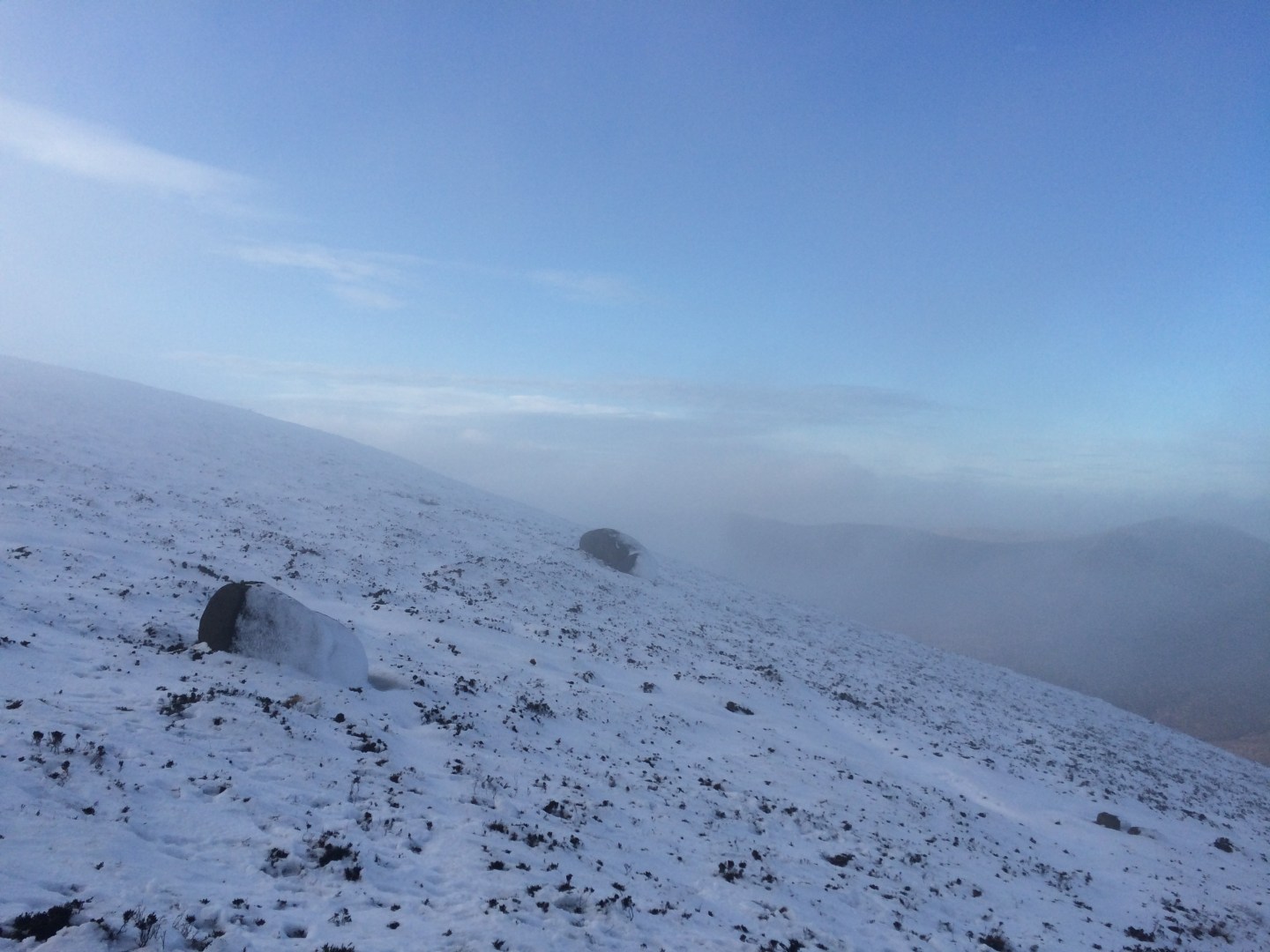
As I was sitting earlier this afternoon, just after three o’clock, it was impossible not to feel how quickly the light was slipping away. By 15:58, the sun had officially set, and it already felt like evening. Add to that the sky never really lifted today: heavy cloud, no break of blue, no warmth from the sun. And as the darkness settled in, it felt heavier somehow. The 21st of December, of all days, that darkness feels closer, more pressing as the sun seems to go down as soon as it has come up. Perhaps seeing the sun set just before four and not rise again until 08:45 tomorrow morning adds to the weight and heaviness of the darkness around us. It is a long night, and perhaps this season of our life has felt like a never-ending one, finding comfort in the reality of the winter months.
For many of us, winter does that – we even have a medical term – Seasonal Affective Disorder – to help explain the effect that the season can have on some people. Yet, for some of us, it may feel longer, deeper, and heavier; the weight becomes normal because we have been carrying it for a long time. What are they? The worries we carry all year round: finances, work, family pressures, health, the future of our city, friends, and that of our own lives. So many things we carry, and they do not disappear when summer comes; often, in the winter months, with the added stress of presents and heating bills, the weight of the things we carry can feel more potent now. The night outside seems to echo something we feel inside:
- We miss people who are no longer with us.
- We feel the distance in relationships that once felt close.
- Or perhaps nothing dramatic at all — just the slow accumulation of weariness, the sense of carrying too much for too long.
Worry, if we are honest, is not an occasional visitor; in a broken world, it becomes a way of life. And at this time of year, it feels heavier.
The State of the World
One of the books that shaped me in the last few years was The Screwtape Letters. They were written from the imagined perspective of darkness itself, trying to undermine faith. What adds to its weight is that it was written during the Second World War, after having lived through the First, wounded in the trenches, teaching students who returned from the front with their whole view of the world changed, which is so felt in its pages. Lewis himself knew something about fear and uncertainty; I remember reading that he once reflected that, in the trenches of the First World War, the greatest danger was not the enemy opposite, but “weariness and water.” Not simply the dramatic threat of evil across the trench; rather the reality of life in such a moment, such a place: exhaustion and the slow erosion of hope and all the distractions that come with worry, as Screwtape wrote:
“We want him to be in the maximum uncertainty, so that his mind will be filled with contradictory pictures of the future… There is nothing like suspense and anxiety for barricading a human’s mind against the Enemy. (God)”
It is not suffering itself that gets us, as Lewis suggests, but the constant imagining of what might happen; the endless mental rehearsal of fear; that is what slowly closes us in.
That insight from nearly 85 years ago feels uncomfortably relevant still today: The Darkness around us and within us does not always overwhelm us by force; Often it is easier to simply wear us down. Yet, it is into that reality, not a tidy one, not a hopeful one, but the one we know today that the Bible speaks with remarkable honesty. The prophet Isaiah wrote to all who would listen: “The people who walked in darkness have seen a great light; those who dwelt in a land of deep darkness, on them has light shone.” Do you notice it? Isaiah does not deny the darkness; he names it and then points to what will overcome it. Nor does he minimise it: He acknowledges it and speaks the light of hope from it. Too often in our age, we don’t know what to do with the darkness around us, so we either pretend it’s not there. Why? Because the Bible never pretends the world is brighter than it is: Yet, it also refuses to say darkness has the final word.
Advent Reminds us there is Hope
Advent is not a sentimental season in the life of the Church. It is one of those great seasons of preparation – like Lent -, and preparation is about learning how to wait. Advent calls us to look to the second preparation of Jesus in order to fully grasp his first one. He came once, so that he would come again, and we are in the middle of that. We are waiting! This season is about waiting, and that Spiritual reality affects and reflects our current reality. Where we wait not in comfort: we wait amid the darkness. Yet, more powerfully still is the great claim of the Christian faith, dare I even say it the great truth of the world: Grace that Dispels darkness. What do we mean? We are not left to deal with the unsealable darkness by ourselves; we are not told to climb our way to the light by our own schemes, strength or resources. No! The light came to them! Not advice; Nor simply inspiration, but true incarnated – A person who was born in a manger that Christmas night.
This is where Christmas interrupts us. Not with an idea, but with the arrival of a baby born in a manger. Why? John helps us understand as he writes: “The Word became flesh and dwelt among us.” That sentence is not philosophical waffle; it is a staggering world-shaping truth that the logos became human. The eternal God did not shout hope from heaven in the distance. No! He stepped into the darkness to bring the light; He took on skin and bone; he experienced hunger and tiredness, vulnerability and limitation. He entered the long night, our long night and walked alongside us through this dark valley.
God did not remain distant from the things that weigh us down – He came close to us where we are, but in his love and power, He will move us forward to where he wants us to be! How near does he come? Near enough to be held as a child. Near enough to feel the cold. Near enough to be misunderstood, rejected, and ultimately wounded for our salvation. And this matters because it reminds us of the foundation of the gospel – Christianity is not about escape: It is about presence.
In the Gospel of Matthew, we are told a name that sums it all up: “They shall call his name Immanuel,” – which means, God with us. It does not mean: God above us; Nor God tolerating us; Nor God close by – No, it declares to us in this long night God is with us. It is the absolute truth for everyone, but it is also personal, present, and intimate. God is with us! With us in the darkness; With us in fear; With us in weariness; and with us in the grief and confusion of our waiting – then it gets even more intimate, and personal. Here is where this becomes personal.
A Truth Meant to Challenge (Conclusion)
Many of us know these carols by heart. We know when to stand. When to sit. We know the words. We know the story. But knowing the carols is not the same as knowing the Christ they proclaim. Familiar words can still carry unfamiliar hope.
Immanuel is not a decorative idea: It is an invitation. God with us — but is he with you?
The Christian faith is not about pretending everything is fine and that we have suddenly become perfect and overcome life because we have found Jesus! It is about trusting that God has come close enough to meet us where we really are. You do not need to tidy yourself up for him. You do not need to feel festive. You do not need to have your doubts resolved or your fears silenced. The claim of Christmas is simply this: God has come near, and he invites you to trust him, to look to Him, and to grasp that there is no where else to find what it is you have been searching for:
““He wants them to learn to walk and must therefore take away His hand; and if only the will to walk is really there He is pleased even with their stumbles. Do not be deceived, Wormwood. Our cause is never more in danger, than when a human, no longer desiring, but intending, to do our Enemy’s will, looks round upon a universe from which every trace of Him seems to have vanished, and asks why he has been forsaken, and still obeys.” (Screwtape Letters)
This Christmas season, as we sing again of angels and shepherds, of stars and stables, the question that presses gently but firmly is this: Will you remain only a listener, or will you receive the hope that has come looking for you? Because hope is not an abstract idea, Hope has a name, and his name is Immanuel. He is God With us, the question: is he God with you?
An Anglican Collect for this Season
Stir up your power, O Lord, and with great might come among us;
and as we are sorely hindered by our sins from running the race that is set before us, let your bountiful grace and mercy speedily help and deliver us;
through Jesus Christ our Lord, to whom, with you and the Holy Spirit, be honour and glory, now and forever. Amen.
 Atr Irwin