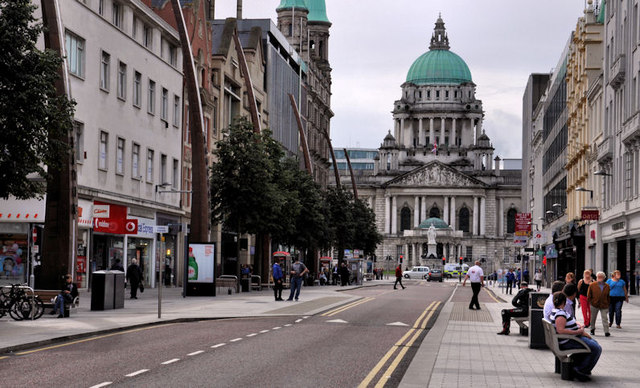
1 Everything Has Changed: Nothing Had Changed (Introduction)
Before Christmas, I was able to go over to the Lyric theatre and see a telling of that world-famous work, A Christmas Carol. It was absolutely fantastic, but one of the things I loved about it was how they had set it in Belfast all those years ago. They had the street set to an old scene, they have the costumes and stage make us feel as if we were living right in the moment that wonderful tale came out, and it got me thinking about life back then, the city back then. Can you imagine what it would have been like? Waking up on a cold January morning, and already there was that weight of the lingering smoke in the air, as you could feel the coolness of the morning seeping in through your windows. It would not be long until your ears picked up the blaring of a horn that would have felt like it was in the house next door, but was coming from the yards far away. Nor would it be long until your senses became more fully aware of the hustle and bustle of the streets; not as a new sense, but as a reality that never really stopped as factories roared through the night and production never stopped; as people arrived from all across the country in hope or desperate need in search of something, anything. People were arriving from across the country, looking for work, to survive, and to have a future. Where were they arriving? Into this city! Belfast, and its streets, 175 years ago.
Onto streets where the Linen mills were producing world-class linen that was being shipped around the world, the yard where they were building ships that were connecting nations and making the world seem like a smaller place. Onto these streets, people were moving from all over the island in search of something to help them survive. Trying to find a home on the narrow streets that were being built to host the ever-expanding workforce, on narrow streets built not for comfort but the urgency of the workforce. Streets where people were squeezed into tenements and courts on top of each other, where damp soaked through the walls so thin you could hear your neighbour breathe. It was on these streets that people rose at 5 am to work 12-hour days, six days a week, with little concern for rest or safety. Where disease was common, sanitation was something unheard of, and child mortality was a common occurrence, and the only social safety was the family around you. It was onto these streets that people moved in search of survival, and the tension that was framing Ireland was growing as different cultures began to clash. This was not a city people dreamed of visiting; there was no culture being formed here, no art being produced, no chorus of music shaping the world. Belfast was messy, real, and unsettled -a place of movement, tension, pressure, uncertainty and strain – but it was home.
1.1 Before a City was Formed
Let that reality linger with you for a moment, and think how rapidly life must have changed for so many who moved to this area in those days. The fact that, in 1831, the population of Belfast was around 42,000; by 1851, the town had grown to 97,784; and when Belfast finally became a city in 1888, it had grown to around 350,000 people. It was into the Chaos that a vision for St Paul’s was born, onto these expanding streets that the foundation was laid, and the walls brought up, and to this community that the doors of St Paul’s were opened its door to serve in 1851, 175 years ago on the 30th of September. Amid that noise, those narrow streets, the busyness, stress, and strain that was the reality the church would face. Into a place still being formed, still contested, still trying to work out what it was becoming and whether it could hold together at all.
1.2 Built With A Purpose
Long before Belfast became a city, St Paul’s would open as a deliberate Christian witness to an area bustling with life and Gospel need. Among the smoke and the industry, among long days and short nights, among people who were exhausted by work, finding refuge in whatever they could; as they where anxious about their families, future’s and life; and probably unsure whether they ever wanted Belfast to truly be home that St Pauls would begin to worship and witness, reaching to those who made their existence in the linen factories, and worked in the docks. People who found refuge in the Railway Bar open just down the street, or who got off the train at the old York Street Station directly across the road. It was in that lived reality that St. Paul’s would live as an embassy of Christ to reach ordinary men and women searching for something. That in the Chaos of this city, they could cross the threshold of these doors and be reminded of a God who loves them, a Christ who died for them and rose again, and the Spirit who was with them amid all the ordinariness of their lives, and the stresses of their existence.
2 Ageless Truth for Faithful Living (Context)
It was amid the brokenness of the human experience, as people came tired from working 6 days a week, and perhaps drinking six nights, that the gospel of hope would have been proclaimed, in which the hope of Christ was to be contended for. As people were told the truth of where they needed to anchor their lives, 175 years might have passed, and with it, so much has changed: as a city was born, as streets have long been forgotten, as the church no longer raises money from charging pew rent, and as buildings have been demolished and rebuilt around us. Our liturgies look different, our language has changed. Yes, 175 years have passed, and this city has changed and changed again, but our mission remains the same and as urgent as ever.
2.1 The Times Have Changed: Our Purpose Has Not
In this 175th year of worship, life, and witness of this church, so much has changed around us, but nothing has actually changed for us – we are here for the same purpose! This first letter from Peter to the Church speaks so much. Why? Because he was not writing to a Church in the middle of perfection, but to scattered believers living amid broken cities that faced all the pressures of life that were real in 1851 and remain as constant in 2026 as people arrive in this city from all over the world searching for life, meaning, and purpose. Peter writes to people who live in places that are as messy and contested as our world today. People are still trying to figure it out! People are daily learning what it means to follow Christ in the middle of all of that.
2.2 Strangers Amid a Stranger World
Thus, when Peter addresses them as “strangers,” he is not calling them to withdraw from the world around them in fear. No! It’s far more beautiful, he is naming the reality of people whose deepest sense of belonging has shifted from the things of this world to something far more. The essence of their familiar might not have changed in its rhythms and norms. Still, their lives are now shaped by a different hope and a deeper allegiance: That they are chosen by God, a people held by grace, and sent into the world with a hope that does not depend on their momentary circumstances – it is from this foundation their faithfulness and fruitfulness will grow by the Grace of the Spirit.
That is where this letter begins, and that is where we start today. As we open 1 Peter together, we do so as people living in a changing city, learning again what it means to contend for hope, not by escaping the world around us, but by belonging to Christ within it.
3. A Word Sent into a Changing City (1 Peter 1:1a)
In the moments that you get ready for Sunday, and you find yourself moving out of the house towards the car, bus, or walking to get to church, I wonder if you ever stop and think, “Why?” I don’t mean why do you bother to go to church, but why Christianity? What is it all about? Or let me put it another way, that after the Sunday morning rhythms have ended, and you have had those after-services refreshments, and you have walked out into the brisk air, and someone stops you on the street and asks you: ” What is that building you have just come out of?” It might catch you off guard, but you would be able to answer easily enough and explain that it’s a church. What if that was someone who did not know a thing about Christianity, Jesus or what happened in a church? Imagine if they asked you, “What is your faith all about? “ – How would you respond? What might you even begin to say? 1st Peter is one of those small but significant letters in the life of the Church that helps us not just to understand what it means to follow Jesus amid the difficulties of our world, but to understand what is central to the Christian faith, the reason Jesus came – Salvation.
3.1 Clarity About Christs Cause
Christianity is not a moralism, nor is it a philosophy, or spirituality – Jesus did not come to teach us something. No! Jesus came to save, to set people free from our biggest problem – sin and death. How can we say this? Because the very name of Jesus means it! So when people try to twist the good news of the Gospel to mean something else, or lessen the weight of sin, we can always come back to the name of Jesus as a reminder of the core of our faith – Salvation. Why? Because our grasp of this most basic necessity affects everything. It affects how we approach Jesus, the Scriptures and what it means to live for him. Think about it – the entire arch of Scripture is one of Salvation – from the Garden to the Cross, and until he comes again, it is the constant story of how God moves in the world to save his children from their sins.
Thus, that is the place where the enemy will attack, prick away, and dilute. Hence, that is why Peter is so firm in reminding the people of this core throughout this letter, that Jesus’ role as saviour was set into motion before the foundation of the earth (1:20), and that salvation is not something we work towards. Rather, it is the very foundation of our life, living, and purpose. Our salvation in Christ is not a one-time event that happened, and then we wait for it to be fulfilled; it is who we are. To put it another way, Our Salvation in Christ is our identity in Christ. He does not just save us from something, he saves us for something – we become more because of it. In salvation, we are not just saved from something; we are saved for something – towards something. Think about the fisherman Jesus met named Simon, who became his disciple, made some mistakes, but would become the leader of the apostles. Yet, we don’t read a letter called 1st Simon, do we? No, we really received letters from Peter! Why? Not because Jesus liked to change people’s names, but because in his presence we are transformed, which the naming of Peter represents. Thus, we see this Salvation/identity duality throughout this letter and these two verses. First, in how Peter introduces himself: An apostle of Jesus Christ – because the gospel of Salvation was not just something he benefited from, but something he was called to live out. Secondly, then in the way Peter writes to a people under pressure – he does not tell them to do better, or be more spiritual, or moral; no, he reminds them of what Christ has done for them, and is doing in them now – he reminds them of Salvation. AS he writes to a scattered suffering church, Peter encourages them by reminding them of the basics of Salvation, and it appears beautiful throughout this letter: “elect,” “Living Hope,” “Abundant mercy,” “sprinkled with the blood…“
3.2 It is all About Salvation
This is a letter all about Salvation, and what it means to live out that salvation in a broken and difficult world, amid all the pressures of life in cities where they worship everything but God. It is to these people that Peter writes as one sent because of Salvation. Not because he had anything to do with it, no, he was only a witness to it – but to be a witness was enough, it changed everything about Peter. So he writes to a weary Church about the hope they have in Christ because he has the authority to do so, and because that saving work is worth fighting for and protecting. Think about that for a moment, Peter writes as one who God has sent, that is what an Apostle is; and he is sent with the authority of God to declare what it is God has done through Christ.. Peter is not simply writing speculatively; he writes as one who knows the value of the Gospel because he has experienced it and has given his life to it. More than that, his authority comes from the author of Salvation: Jesus saved him and Jesus sends him to content for the Gospel because Jesus knows the reality of this world, and what all people need is relationship with him, Thus, theese words form Peter are not just advice from someone who has been there; they are words sent by Christ himself into pressured places.
3.3 Words of Comfort from Salvation Truth
They are words for us today amid the reality of our city and its overwhelming need, because what those scattered in the provinces of 1 of Pontus, Galatia, Cappadocia, Asia, and Bithynia, and we today need to be reminded of is the fullness of Salvation. Salvation is not only something Jesus did on the Cross long ago, nor is it something we are given and then await. Salvation is the Christian life because it is the foundation of Christian identity; thus, as Peter writes, he begins not with morality or resilience but with what Jesus has done. Why? I think it is pretty simple, really only those who have fully grasped the wonder and joy of Salvation, and been grasped by it, will have the strength in Christ to endure for Christ. Peter has seen it all and experienced as his world collapsed at the Cross, and there he wondered what it was he had given his life to in following this Jesus. He had seen his world collapse at the Cross, and then three days later, the power of God and the wonder of Salvation soon began to make sense of it all as he left the empty tomb. Think about that for a moment, Peter had witnessed the most horrific thing the world could make anyone endure, and then realised not only did Christ endure the Cross, but he also defeated death and the curse of sin. This was the power of Salvation and the strength of God, and this was what Peter was reminding these people under pressure about – if God can use the Cross for His Glory and our good, he can use anything. Peter writes to encourage because he has seen and been through it all; it’s not just what he saw Jesus achieve. He writes as one who has known the fullness of Salvation in his life: He denied Jesus, Jesus restored him, and then, in power, he was sent by Jesus. He has lived the transformation that comes from the Cross, and he has given his life to its cause.
3.4 The Cross Reminds us What God Will Do
Why so much talk about Salvation? Because when we look to the Cross, we grasp that this Salvation is a settled reality, a truth. Do you hear that? Amid the pressures of life and the challenges we will face as disciples and a church, what needed to be done has been done! We are not trying to earn our way into God’s favour, or strive by our own might into greater spiritual things. No, we are sons and daughters who are learning to live from love and a salvation that is already secure. That is why Peter begins here, not with a list of commands or a warning about performance, but with identity and belonging to Jesus because of Jesus. It is well with our soul because we have the steady assurance that the God who saves is the God who keeps. Once the gospel is the ground beneath our feet, then what this letter teaches us begins to make sense: We may live in streets that we have only ever known, speak with twang that is authentically Irish, we might work the same job for a life time, we might live a life that feels so normal, and yet it still feel out of step, like something is not quite right, something does not fit. Why? Because, like Lewis said, “If I find in myself desires which nothing in this world can satisfy, the most probable explanation is that I was made for another world.” We are in this world, but in Salvation, our eyes are opened to the truth that we are meant for something more. Thus, Peter takes this weary, scattered church by the hand and reminds them of whose they are before ever getting to the outworking of their faith and witness in their time. Peter’s words remind us of what God has done for us from the Cross and over the last 175 years in this parish, before challenging us to look forward in faith, on the foundation of Salvation, and to ponder what might be. It is that foundation of Salvation that we see in the next few verses.
4. Strangers, Chosen by God (1 Peter 1:1b–2a)
After beginning his letter and reminding them who he is, Peter does not take long to remind them who they are by Grace and what that means for them today. Several things flow from the identity that Peter gives them: how wonderful Grace is as a Gift of God, A reminder of how our status before God has nothing to do with us, and what our identity in Christ means for us in this world today – all of that in a few words. The English translations shape it differently:
- To God’s Elect, exiles scattered… (NIV)
- this Letter to the exiles of the dispersed tribes (in Pontus….) (Philips)
- To Those who are Elect Exiles of the Dispersion (ESV)
- God’s chosen people who are living as foreigners (NLT)
Peter writes as one who has seen salvation unfold at the most pinnacle moment in human history and then felt the effects of the risen Christ in his life. He writes as one who tried to do it all on his own strength and will, one who thought there were times when he knew Peter that God himself knew how things ought to unfold. He wrote as one who had got it so wrong, but by the Grace of God had been found right – he knows what he is talking about. Thus, these words right at the beginning of this excellent letter begin to unfold something amazing about the privilege of Grace, but also the reality of what it means to live as children of God in a world that is still awaiting the full effects of redemption.
4.1 Being Clear About What Exile Means
You see at times in the church, and our life in the Kingdom there will rise a view that tells us how bad this world is, how good we are because of what Jesus has done for us on the Cross, and that what we must do is wait out this stage of our lives for something better to come after death – that once we have come to faith, the rest of our lives and this moment is almost pointless. Or, you might hear people tell us that we are to live like exiles, they will talk about how evil the world is, and there is nothing we can do until God comes again and wipes away sin – so we must heed the words of Revelation and “come out from among her and be ye separate!” We are told that this is what it means to follow Christ in a hostile world. And, in many ways, it makes sense. Life is complicated, people are hostile to faith when I try to talk about it, and God is the one who saves us, so let’s let him work. That sort of mind comes to this verse and thinks – Yes! That is what we are, exiles in a world forsaken; we must survive. Yet, I don’t believe that is what Peter is getting at here, I believe that is the easy thing to hear because its less messy – especially when we feel we are living in a moment of decline: Church attendance is down, the morals of our culture and changing so quickly that it can be hard to know what people even think is true, when the leaders in our institutional churches seem to lack courage about teh mission or conviction in the gospel, and when the church itself appears to have moved to a strategy of survival and managed decline by stragetities of retreat, management, and maintenance rather that mission and kingdom building.
4.2 Exile as Identity and Purpose
Exiles, or whatever language we see here, is not simply romantic language, nor is it a statement about how the Kingdom of God means withdrawal from our cities. Instead, it is the truth about the reality many of the people Peter is writing to – they are residents outside, people who are socially marginal, economically vulnerable, and without protection, they are people who have no foundation – in the turmoil of the world’s sea, they are adrift. It sounds like something negative, but it is not! Peter points out something beautiful, something powerful – something that can only come from God. This displaced status within the world sits within God’s purpose. They might be scattered across different places without foundation or support, but it is all part of God’s plan. Yes, they explain marginalisation in this world, but God, known by God, also chose them, and they have been part of his plan since before the foundation of the world. The insecurity they feel in the world does not contradict the work of God in the world; it sits at its very foundation because God does not work in the ways the world expects him to. He works in ways that subvert the world’s notions of power and belonging. Yet, there is also a duality to existence as exiles, sojourners in this world, because verse 17 later employs the same language more metaphorically. Thus, these are people who know the reality of the world they live in and, by Grace, sense that there is something beyond this world, while they live in it for Christ. Exile is both a statement of their reality in the world, and all of us who feel the effects of the turmoil of our culture’s sea when nothing feels secure, and the truth of living in the Kingdom of God, where by the Spirit we experience it and also know there is more still to come.
4.3 Chosen Before the Foundations of the World
Thus, Peter takes what is their experience and reframes it as all part of God’s plan, because they have been “chosen according to the foreknowledge of God the father,” this is not about arrogant theology, or about debating predestination; it is comfort to the weary ears, that the moment they find themselves in is part of the redmpetive plan God set into motion from before the foundation of the world. Their moment is not random, their suffering not unseen, nor their story unknown – it is all part of God’s work in the world. Their moment was not random, nor is ours. God sees our effort, he knows our pain, he sees our heart, and he honours our work. As we go into this year of Celebration and hope and look back over 175 years we don’t do it with the regret of better days, no we look back and see the hand of God, we pause on today and give thanks to God, and we look forward into the future knowing that if we are bold with him, and confident in our status and call as sojourners called to be faithful amid our city and streets that we will see the Goodness of God that has brought us this far. The reality that we find ourselves in today is not a statement of God’s power or how he values us, whether our churches have 500 or 50, our call remains the same – to be faithful, fruitful, exiles living in a city we love, longing for the fullness of God to come. Peter reminded a weary church of their identity in God. By the same truth, we are reminded that God defines us long before the world attempts, and that our identity in Christ helps us reframe the work that God has called us to – there is no promise to be free from suffering. Still, God makes it Clear that he is with us in the pressures we feel, in the challenges ahead, and in the work he calls us to. That means, as a Church, we can give thanks for all that has been done and look forward to what is ahead, confident that we will see the provision of God in the years ahead, even if the institutions we are part of lack. God has moved on; we must not. All that Peter has said about his authority, their identity in Christ, and the reality of how to live in the world is not about being arrogant; it is about gospel resilience: they are reminded of this truth so they can live faithfully amid the brokenness of the world. That we can endure because Christ endures, because our confidence is rooted in something beyond this world. This is nothing new in Scriptures; even in exile, God’s people were called to remember that they were there by his hand and to live faithfully and fruitfully for him. At the same time, they remained: “Also, seek the peace and prosperity of the city to which I have carried you into exile. Pray to the Lord for it, because if it prospers, you too will prosper” (Jeremiah 29:7). 1 Peter is the call of Jeremiah to the Church today. We live knowing who we are, where we are, but in a way that shows it to the world, desperately in need of hope. But Peter does not leave them merely named; he shows them how God is at work in them and through them, by how they are sent.
5. Sent with Grace and Peace (1 Peter 1:2b–2e)
We might be exiles, living in a world that is not entirely our home, awaiting a future we have had a sense of by the Spirit and Grace, but know there is more to come. But our exile is not static, motionless, or idle. No, in this exile we stand on Grace and are moved forward in it. What are we sent in? Grace and Peace! Who are we sent by? The triune God of the universe! Do you notice the depth of the language, theology, and imagery that Peter employs in a few short sentences? This is one of the most beautiful, triune verses in all of Scripture, as we see clearly each person of the Godhead at work in the life of the believer.
5.1 Propounding Personal Truth
Yet this is not simply a theological verse; Peter is writing pastorally and personally to encourage a weary church to endure in the work that God has called them to, reminding them of the work of God in them. Peter grounds our ordinary in that extraordinary action of the Father, Spirit, and Son. Not ethically, but with deep pastoral assurance that faith that did not begin with us alone, is not sustained by us alone, nor will it be completed by us alone. No, we are those “whom God the Father knew and chose long ago to be made holy by his Spirit” all for the kingdom and Glory of God, why? “That they might obey Jesus Christ and be cleansed by his blood.” This moment we find ourselves in, whatever moment we find ourselves in as individuals and a church in the year to come, is all part of God’s plan.
We are caught up in the saving work from the beginning to the end. No matter the mistakes we make or the challenges we face, we can be confident that the God who chose us before us is sustaining us by His Spirit and moving us forward to the Glory of Christ. Let that hope hit home, nothing in our life is accidental or outside of God’s plan: our location, moment, story all sit within the purposeful love and knowledge of God. Secondly, in all that we experience and go through, God is at work. Over the last 175 years of this church’s life, the Holy Spirit has been at work in the generations before us, making them holy and useful for God.
5.2 The Same Spirit At Work In Our Ordinay
Today, it is the same Holy Spirit at work in all of us to the same end. That amid our ordinary and complex lives, we are being set apart as a Holy people for a holy Purpose. In all, we remember through the lens of Scripture that Jeremiah called the people to embrace their exile life as a witness to God’s goodness, and today it is no different – our holiness is not withdrawal from the city, but inhabiting it differently. Shaped by God’s love and presence and then shaping the culture around us by the fruit of the Spirit, rather than the cultural pressures of our cities, moment, and age. Our endurance through weariness is not static survival, it is Kingdom advancement in ways that subvert the essence of the world around us – that is the mandate of the Gospel Sojourner sent by the triune God. Beautifully, as we are called to live, we grasp where our obedience flows from – the cross. Our obedience is empowered by the Spirit, as a fruit of our salvation. It is never an effort towards Salvation. To make it even clearer, Peter employs the language of the covenant through the imagery of Blood to show just how deep this relationship is. We are captured in the saving work of the Father, Spirit, and Son; and then sent by them into the world to be in with Grace and peace.
5.3 We Are Sent in Grace and Peace
Peter closes the introduction here by naming the two things we need to remember and experience most to continue to endure; these are not named as some abstract idea, no! They are sustaining gifts from God to His children for our lives in the world. Grace in our weakness and peace in our anxiety are there by the work of the Spirit in our lives. Grace and peace are God’s provision for our forward obedience towards his purpose and end amid the reality of a difficult city and a hard mission field. It was his Grace that brought this place to be, his peace that sustained worship and witness through world wars, fires, troubles, and chaos; and it will be his grace and peace that will sustain us as we advance further in mission in the year ahead not by trying to survive or maintain, but by moving forward with confidence and trusting that God will provide for the work he has called us to. Scattered we may find ourselves in the world, but in Christ we can be confident that, first, we were chosen, and from that position our scattering is our seeing in grace and peace, sustained by the Spirit, to content for Hope right where God has placed us. A place where we have been contending for 175 years, and where there is far more contending ahead.
6. Contending for Hope in a Changing City (Conclusion)
So what does all of this mean for us, here, now, in this place, at this moment in our life together as a church? It means clarity, it means learning again that we are not here to serve an institution for its own sake, nor to preserve systems simply because they have been handed to us. We are not here to manage decline well, or to measure success by how smoothly things are run. No! We are here for one thing: To build the Kingdom of God, to proclaim Christ, and to see sinners come home to Jesus. This is our foundation, and our call, and that will mean, at times, we will need the courage to resist pressure, vision, or expectations that do not place mission at the centre, perhaps even when that pressure comes from within the institution itself. Faithfulness in our generation will require discernment, prayer, and a willingness to say no when something pulls us away from the work God has actually given us to do. No, because we are angry or bitter, but because we are convinced that God will do what he said he can do. Thus, our endurance and resistance must be marked with conviction, confidence, and love because I believe we are at the threshold of renewal if we continue to endure.
6.1 This is Our Place
It also means owning our place and remembering that God has not placed us in an idea, no, he has placed us in a location – this city is our call, and we are the means of its hope. This is not simple, no call to the city is, but it is our call: These streets carry memory, division, resilience, grief, and hope all at once: Tiger’s Bay, The New Lodge, Duncairn, York Street, and the Shore Road – These are not just names on a map. The Times, The Mount, Midlands ABC, Harry D’s Lounge, The Hole in the Wall, The Grove, Cityside, and Duncairn Community Centre – these are not just places near us, they are places where people meet to do life. We must be there to live out our call and show them the God who loves them. Dare I say it, they are the places we are being sent, and in which we must endure. All of these communities are filled with real people, real stories, real need, and real longing – which can only be met in Jesus. Loving North Belfast is complicated and will be costly, but it is our call. We are not called to do it alone, and we will seek partners, support, and help as we go, but we cannot hand away responsibility for this place, nor let any scheme dilute our call or heart to this place. We cannot allow anything to weaken our ability to be present here because this is the mandate God has given us, especially when moving elsewhere would feel easier. God has placed us here, and presence is part of faithfulness.
6.2 This is Our Call, to Contend
If we are honest, contending for hope will also mean letting go of the idea that faithfulness looks like doing things the way they have always been done. Are we brave enough to admit that even in our lifetime, the city has changed, and Culture has shifted? The assumptions people bring into this building are no longer what they once were, but the needs are the same, and our mission in Christ towards them has not changed—the call to make Christ known for the next 175 years. So we honour and give thanks for the past not by clinging to it, but by allowing it to shape us for faithful obedience now. The same courage that planted this church in the middle of smoke, industry, and uncertainty is the courage we need today. Not to hold on, but to move forward; Nor to retreat, but to adapt for the sake of the gospel. Praise God, we do not do this in our own strength, because we remember we are sent with grace and peace: Grace for our weakness; Peace for our anxiety, and confident hope for the future as we contend. Because the God who has sustained worship and witness here through war, fire, division, troubles, and change is the same yesterday, today, and forever. The God who called this church into being before Belfast was even a city is still at work today. Thus, we must be confident that God is still at work, grounded in our salvation, secure in our identity and expectant that the God who has been faithful for 175 years will continue to be faithful as we contend for hope in this city He loves.
 Atr Irwin