Seeing the City with the Compassion of Christ
Introduction
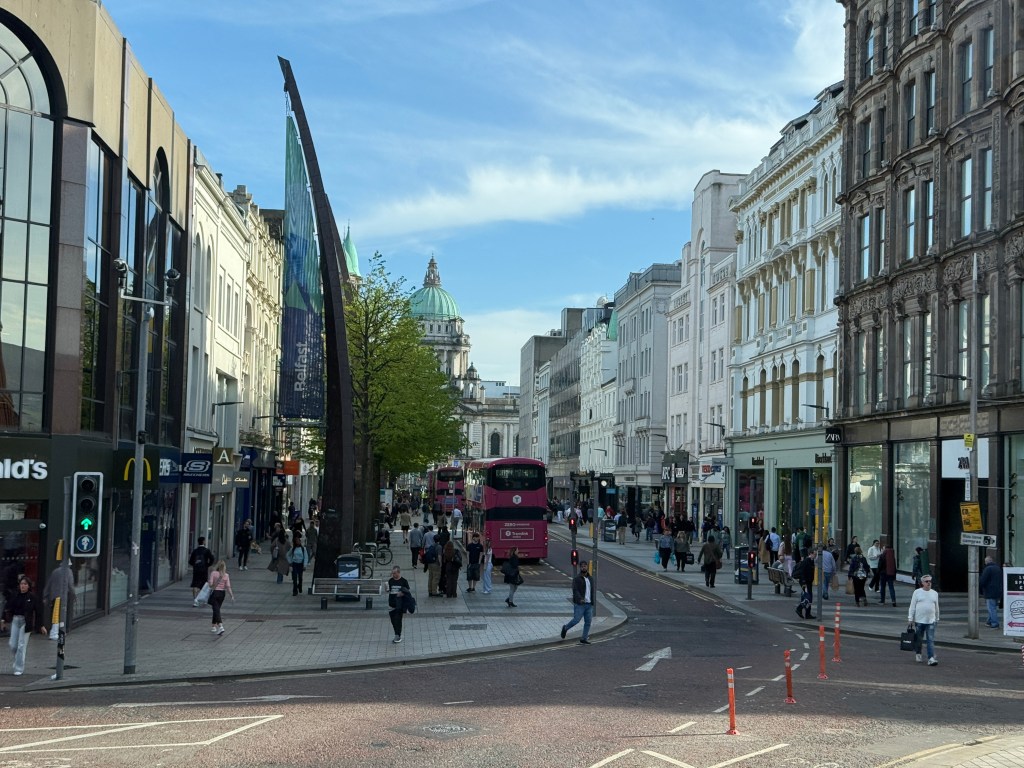
I love our city, and over the past four years, as I have served in this Church and parish, I can honestly say I have only grown to love our city even more as a city I studied in began to feel like home, and the streets I have driven through began to become streets I walked through; as buildings I looked at became resources I used. I am not from Belfast, I grew up outside of it, travelled into it and through it – but I am not from it. Yet, over the last four years, as I have moved into the area, served in this local church, and met local people, Belfast has become home, and I am so thankful for that.
This week, as I have watched the news with dismay, prayed with distress, and pondered what we can do with a sense of helplessness, I think what has hit me that bit deeper this time, more than any other time, was that I was grieving and praying for my home. Suddenly these are not streets that I have never heard of, they are shortcuts I have taken to get home, suddenly they are not parts of the city that I will never be in, they are in our parish; they are streets I run, neighbours I live near and places where member’s of our church come through to gather with us – they are places where home is known and lives are lived.. Thus, what felt like a distant world before on the news becomes so much heavier because it is where I live, it is the streets that I sing praises about, the people who I say are wonderful, and the parts of our city that I tell people are a hidden gem; it is home. Not only is it home, but it is also the place that God has called me to live in, serve in, pray for, and seek His Kingdom in; it is my spiritual home. Thus, as cars burn and traffic is blocked, as buses are set alight, and people within our parish pray and wonder what to do, I found myself thinking about what it means to be a church in a season like this; how do we pray? The truth of Psalm 100 today and all of scripture is something that should bring us comfort amid the unknown and challenge: “It is he who made us, and we are his; we are his people, the sheep of his pasture” (Psalm 100:3). He made us, we are his people, and the sheep of his pasture – that means no matter who we are or where we have come from when we are in Christ we are one people, and one flock.
The interesting thing about that truth from Psalm 100:3, and lots of scripture, is that when God talks about us as his people, it has some reference to place and being. We are his people and the sheep of his pasture; pasture is a place of dwelling, being, and following the Lord. Our identity in Christ and the security of our eternal relationship are not ethereal; they are rooted in place because that is where God has placed us to do his work and live out our Kingdom Call in Worship.
We are the sheep of his pasture in Belfast; thus, when the city shakes we must seek him and ask of him: What do we do Lord to serve you in this city? How can we continue to exist for Christ and this city, because let’s be clear this is his city, and God is still on his throne even amid all the chaos of the last week that has spilled on onto our streets, even amidst the most vile of human acts God is still sovereign and ruling over all things and working them for his good; God is still for Belfast and its people, all people that he has brought to our streets so that they can call them, as we are still his body empowered by his spirit called to serve this city that the hope of Christ might be made known in word and deed. It is a hard question to ask in the best of times; it is a harder question to ask; yet, our call to trust the lord and serve the lord in our pastures does not change with circumstances; it continues despite them because the same spirit that raised Christ from the dead is breathing life into the Church in all places and most especially the difficult ones. This gospel imperative is what we see in our passage today, because what we are challenged to consider is not the state of the world but Christ’s heart for the world and how he sees all who inhabit it. Our Kingdom call to reach them because the harvest is plentiful, and in Christ, we are the workers of the harvest.
1. See the City with the Compassion of Christ (Matthew 9:35–36)
There is something extraordinary about how we miss the ordinary in the Gospels; the pace of Matthew’s account of the life and ministry of Jesus; there has been no let-up until this point, as disciples have been called, as teaching has been given about fasting and the dead have been brought to life, and a woman healed from long-term sickness. Jesus has been on the move, and as he has been on the move, the world has been turned upside down as the dead are raised to life, women are restored to worship in society, and the blind are given sight and the mute voice. It is the King showing what the Kingdom will look like every step he takes, about what the Spirit might do if we are willing to let him work through us. It is all extraordinary, surreal, and fast-paced as the Gospel goes out and the Kingdom is established with every step Jesus takes, every conversation that he has, and every life he interacts with. That is extraordinary, but so is the ordinary that we can so often miss in these moments.
1.1 Jesus comes near to real places
I love the ordinariness of what Matthew paints here as he writes; there is no place that Jesus will not go! He is a man on a mission, but his mission is not too great for ordinary places; rather, it is amid the ordinary that the mission of Christ is fully known and made known. So often we think about the work and way of God through the lens of the world rather than the radical nature of the Kingdom. We think of the mission being lived out and fulfilled in the big spaces and places because that is where the most impact will be had, rather than amid the ordinary. We want the big building, the main stage, and to be where culture is formed, and decisions are made, because that is why the world convinces us of what impact looks like and the means are found. Yet, there is never any hint of the wisdom of status or the influence of privilege in the Kingdom of God and the ministry of Christ in scripture; it is in the ordinary where the extraordinary power of the Kingdom of God is made known. Isn’t it fascinating that Matthew notes that Jesus went through all the towns and villages on his route; that is, Matthew tells us that Jesus took his time to go through ordinary places, amid ordinary lives and normal people and there did extraordinary things. It’s not a random detail that Matthew includes for no reason; it is a vital detail because it helps us to see when and where the Kingdom of God goes and grows – in the ordinary. In those towns and villages that history will forget; in the churches no one talks about, on the streets that bus tours will not visit but riots might rock – it is in that ordinary that the Kingdom is on the move.
Furthermore, we are reminded in the simplest of ways that the God we worship and the messiah we entrust our eternity to knows the ordinariness of our days; God is not far from all that we know, experience, and go through. He has lived it, walked amid it, and ministered from it. He sees the stories being formed, the chapters written under the light of joy, the pages filled with the darkness of despair; he has felt the pangs of pain, the burden of work, and the search for hope. Our God knows, and because he knows, we can trust him. All that is normal in our ordinary life was normal to Jesus, and was that which Jesus ministered to as he went among the towns and villages. Why does it matter? Because the good news of the Kingdom of God is good news in all places and to all people, because it is for all people, and because God has lived amid all the ordinary experiences of our life, we know that this gospel is good news in every area of our life. The gospel is not an abstract truth for an ethereal world. It is good news because it comes amid the ordinary and by the life of the Spirit makes its extraordinary for the Glory of God, by the way of Christ. That is how the Kingdom is built amid the ordinary of our lives, streets, and stories.
This should speak hope to us today; because we live in an ordinary place, we write our stories amid streets that people do not visit, history will not write about; and the news only shows when chaos is unfolding – this should speak hope to us because the streets we write our story on, are the streets Jesus would be drawn to; the people we do life with and seek to share hope to are the people that Jesus would come for. These streets where fear has risen in the last few days are the streets that Christ has come for, that the Spirit might be moving us towards: York Street, Tiger’s Bay, Sailorstown, Duncarin, New Lodge, and all of north Belfast – these streets and the place in which the Kingdom will advance and the gospel is needed the most. As Jesus moved amid all the ordinary places, the Holy Spirit is moving us in our everyday lives into the same sorts of places in the same ways as Christ to establish his Kingdom and make known the hope of the Cross. We don’t shout hope into the mess of the city from the safety of our walls, nor do we whisper it gently from the shadows or safe places; we live out hope faithfully in word and deed by the Spirit, faithfully before Christ in the middle of our streets, homes, and communities, because that is where God has called us to serve. We never knew who the Spirit might have brought to us from the ends of the earth to reach.
1.2 Jesus brings the whole ministry of the kingdom
Thus, in those ordinary places, what does Jesus do? He gets on with the extraordinary work of the Kingdom of God – of making the gospel known. Do you notice there is no sense of seeing whether the village is okay, or whether the town is willing to receive and is politically stable enough to hear about this Kingdom of God? There is no waiting to make sure things are okay; there is no surveying the people around to make sure they are the right type of people; nor is there even any conversation with local leadership. Where the spirit moves, the work of the Kingdom unfolds in extraordinary ways amid ordinary places and normal people in three ways: teaching, proclaiming, and action – healing every disease and sickness. This is the beauty of the gospel; it makes a difference in all the areas where we face challenges and stress in our lives. To the misinformed and spiritually ignorant he teaches about the truths of God in the place where truth should have been made know; then amid those who are lost in normality Christ meets them with the proclamation of the truth of the kingdom, that good news of the gospel; then finally Jesus meets the physical needs and challenges that ordinary people face in their life in a difficult world as he heals every disease and sickness. Three actions to the same end: making known the Kingdom of God in word and deed in every place and every way because God sees us in our ordinary and meets us there, and no one is out of place or purpose.
No matter where Jesus went, he went with the same mind and purpose to teach the truth of God, make known the hope of the Gospel, and show the power and love of God in word and deed. Why? So that people might respond in faith and come to know fully the love and life God has for them. To the ignorance, lostness, and brokenness of our ordinary lives, the Kingdom of God breaks in with truth, power, and healing. Our City has shaken in these last few days as wounds we thought might have healed have once again been ripped open. The quiet has been replaced by a chorus of noise and shouting about what is right and wrong and what should be done in response to this or that: We are told what to be afraid of; we are told what we should do; we are told how the government has failed us, and then how they have not done enough; we watch as police respond and then as the chorus rises out from politicians who say they have not done enough or they have done too little. The noise becomes noisier still and only adds to the weight of the moment and the anxiety our pain brings us. Yet Jesus reminds us here of our normal needs in every season of life, and especially in these moments of deep darkness. When the wounds of weariness are being pulled open around us by forces that are hard to discern, what our city needs is not more outrage, analysis, politics or schemes form the Church, it needs Gospel shaped people being moved into the ordinary with Grace of God to make known the love of God by teaching, proclaiming, and doing the Kingdom where God has called us to serve. Bluntly, our call to the great commission is to announce the Kingdom and incarnate it among those whom God sees and moves us towards.
The Scriptures always move us to something deeper than the moment; something more real than the noise, something that gets to the heart of all our issues, not just one. Scripture moves us to the work of establishing the kingdom of God because it can truly transform our society. Why is it that there has been peace for thirty years, and then suddenly chaos spills onto the streets, and we wonder whether peace might begin? Why does it happen? Because the peace we enjoy is not the peace that passes all understanding – that can only come by the Kingdom. The true peace this city needs to reshape it can only begin when sinners meet Christ in faith, and then, when the hearts of individuals are transformed, we will slowly see a city reshaped into something beautiful.
1.3 Jesus sees the crowds with compassion
It is the peace that Christ gives by the Spirit that he looks at us with in our normal places and routines. And, it is the peace that flows from the heart of Christ that he looks upon the crowds with. There is no judgment upon the Chaos of their ordinary life, and that has become so normal that it has become expected; no one assumes there will be anything different because the chaos of sin is all we have ever known. Yet, so gracious is our God, so loving is our saviour that when he walks through the filth of sin, the heart movement of his heart is compassion; he joins in our suffering with empathy and understanding, he feels it, and lives it! And, because he knows it, he can transform it. Isn’t it interesting that before he commands anything of his body (the church), he himself is there with compassion and action. That is intentional compassion and action; it is the mercy of God before us and the way of the Kingdom for us. Do you see it? Jesus sees what others miss and shows us what others will not; he sees the image of God in all people and in all places and shows us the movement of the Kingdom before them. Jesus sees the deeper issue of sin and gets to its heart through the noise of the moment. That is what is carried in the language Matthew gives us of a people who are “harassed and helpless,” those who are lost in their sin and for whom the world has beaten down; they are troubled, cast down and vulnerable – even if they don’t realise it. Yet, in that state of ordinariness, the compassion of Christ and the mercy of God are most known as the Kingdom goes forward in faith, word, and deed. Jesus is not naive about the curse of sin – he has come to deal with it – but he is never contemptuous towards the sinner, because in them he sees the potential of the Kingdom and the sheep he has come for: that is the compassion Christ speaks of.
1.4 Jesus sees sheep without a shepherd
I wonder: as we look out at the world around us and at the state of our city, do we see with the eyes of Christ in this moment? As Jesus moves through the ordinary places and the stories of people’s history that will not be remembered, as he teaches them truth, proclaims the Kingdom, and restores that which is broken by sin, he is not addressing social disorder; he is getting to the heart of it, the root of every problem – their lostness. Or dare we call it their shepherdlessness? The people are lost, all people are lost spiritually, and Christ has come to find them, and then send us in the same way and mission. It is surreal to come to see it – all the problems of our world and l life flow from our heart and standing before God, because without him we are lost. In the ordinary, we allow ourselves to be led by anything at all that might give us purpose, security, and tribal politics, perhaps even by hate and bitterness fueled by the echo-chamber culture shaping tools of our age: social media, websites, and the internet. What then is leading us? Christ or the world.
One thing we need to be clear about in this weary season and heavy moment is that the way of Christ will always afford the norms of the world and the context we find ourselves in. The Cross does not only confront the powers of the world; it confronts our understanding of power and the ways of the world. That means if our reaction to a moment does not align with the norms of our age and its understanding of power, identity, and purpose, then perhaps we have lost sight of the King and his Kingdom; perhaps we have allowed ourselves to be aligned to worldly notions rather than confronting them with the gospel of Grace or the ethic of the Kingdom. In times like these, we must be intentional about choosing the Kingdom and living out the Kingdom call to ensure we do not become another voice feeding panic, fear, or contempt. We as sheep who know the joy of life with the true Shepherd, and if he has grasped our hearts, then we want all people to know that life and take part in it. As Sheep of the Shepherd, our delight is to help others find him and make him the defining part of their story. Thus, as we sit and wonder what we should do, we always remember what Christ has already done; he moves with compassion into the ordinary and brings the Kingdom in word and deed. This gives us a way to speak hope and minister mercy to those whom God is seeking; to speak to the city without despising it, and to refrain from retreating with the winds of the storm’s rage. Like Christ, we don’t discriminate when the spirit moves us, the unnamed streets around the people who live in them and us, we move towards, we stand with, and we speak to – not what they want to hear but what they need to hear! We teach them the truth about God, we proclaim the Gospel of the Kingdom, and we demonstrate the ethic and way of the Kingdom in deed by restoring and healing that which is broken before us. We pray for the afflicted, we stand with our neighbours, and we serve those in need because by it they might know the Glory of God and the Grace of Christ, as we long for repentance to become real in our city and mercy known. Why? Because it is only by the Cross we know the shepherd and our ordinary has found something extraordinary – there is nothing of us in salvation, we have not earned it nor deserved it. Thus, our compassion is humbled, as the Spirit moves us to Christ, who died for us while we were still sinners, and now moves us to sinners so that they can know life and peace by the beauty of the Cross. That is our hope and call in every season.
2. Christ Calls His Church to Pray (Matthew 9:37–38)
We have considered the example of Christ that this passage has laid before us, and it should have made us thankful for what we have by faith, the work of Grace in our lives. Yet we have this challenge: to help the Kingdom take hold in the ordinary places where God has placed us, so that people can encounter Christ and begin to know the Love of God fully. We are reminded that the way of the Cross is the way of the Kingdom in every context and season. The ethic of the Cross is the ordinary power of the Kings that turns the norms of our world upside-down to the Glory of God. Yet, we have all these truths, examples, ethics, and calls, and we might still find ourselves wondering what we must do now. As the Gospel account of Jesus life in Matthew’s writing continues, we are given two examples; the first of which is Simeon. In every step of our walk with Jesus as disciples, we pray because its talking with the Father who loves us; in every movement of the life of our church and body, we pray because it is how we align our selves to teh others willl; and when the wounds of our city are ripped open and pain pours out onto our streets once again – we pray because we need the Father before we even begin to think abotu what to do.
2.1 He sees not only a crisis, but a harvest
Isn’t it interesting how Jesus responds to the lostness he encounters in these ordinary places? He looks upon a world that is far from God, and a people who are meant to know God and then make Him known in their helplessness and sees not spiritual Crises but Kingdom opportunity. He sees them in their harassed and helpless state as sheep without a shepherd and has compassion upon them, and the outflow of that compassion is seeing the Kingdom opportunity for the work to go on. He does not turn to the disciples to lament the state of the world and how far people have drifted from God’s original desire; he turns to them and points out the opportunity. It is their helplessness that allows him to say: “The harvest is plentiful…” It’s surprising isn’t it, because so often when mess becomes real and that which simmers beneath the surface boils over the top we think of the worsening of a situation; we need stable cities to do God’s work, we need people who have have already gotten most of their life together and just need to sort out the Spiritual bit – what we don’t need is mess, or so we try to convince ourselves. Yet, mess is ordinary, chaos is normal even if it’s unseen, and so where we might see Criss, threat, fear, or the impossible, Jesus sees gospel opportunity.
Never in an attempt to minimise it, but because by the hope of the Cross despair will never be our ultimate or reality, there is always a reason to be hopeful and confident that God can work. Why? Because if death can’t stop Him, nothing can. Thus, a city in Chaos where wounds are opened once more, and people find themselves unthread and unanchored, is not simply a storm to ride through, something to analyse or survive – it is a harvest field that remains plentiful and which Christ is sending his people into. All people in the Kingdom to all the people of the city for the Glory of Christ. Isn’t that the most beautiful thing, that the city God has called us to serve in and reach is a mission to all people in our streets, not just the neighbours and friends we like – but all people, the neigbours we dont and the ones we would rather forget; the people who have lived beside for a life time and the others who have only lived there a short time – the harvest is plentiful in every house and home, because we do not know where God might be working.
Thus, our hope means that in this, we don’t long for it all to be settled down and get back to normal quickly; we hope that the work of the harvest might bear more fruit because when lostness becomes more real, people’s searching becomes more urgent and in their suffering, pressure, fear, and uncertainty.
Christian hope is not optimism that things will quickly settle down; it is confidence that God is at work even in suffering, pressure, fear, and uncertainty.
2.2 He names the need for workers
The opportunity is great before the King of Kings, and those he has called to serve him – even though it is hidden under the grey of what has become normal and expected in a broken world; the problem then is not the potential it is those willing to get stuck into the work; to get on with the kingdom call in the place where God has called to live their lives, and live out His life. There is no shortage in the goodness of God, or those who might respond to the Grace of God; nor is there a lack in the Spirit’s power; the challenge is simple – people power! God has saved us, sanctified us, and is sending us – but are we willing to be sent? As we look into the reality of our world, as we think about what is normal on the streets around us, do we see the harvest that Christ sees, or does our sight stop at the reception of the world? How we choose to live out the Kingdom depends somewhat upon us; we can either sit in our building and pray about the pain, then spectate the mess in the hope it changes and does not affect us too much, or we follow as the Spirit moves us into unimportant streets that are important to God to do the extraordinary work of the Harvest in word and deed. The need for which becomes all the more real as our city finds itself in even more distress than the weeks before. Our call in this moment is as we pray for the city to heal; we become part of its healing by going to the people God is calling us to reach to do the work of deeper healing, that which only the gospel can fix. We pray, and then we allow the Spirit to move us to be the answer to our prayers this city needs as we move out into the neighbourhood around us and show love, welcome, and hospitality to all – not because we are better, stronger or more impressive, but because we can offer grace we have already received. We know the beauty of a fruitful harvest: we live because of it.
2.3 He commands prayer before action
Yet, before the watch of the harvest begins, and even a practice run can take place, there is one final lesson of looking and dependency. The harvest might be plentiful, the workers for the field few, and the needs urgent – but that does not mean there is a rush. The lack of workers is not a sign that God is not in control or has lost his way; it is exactly as God intended and will be exactly as God desired. Thus, before the rush into doing the work, we must first seek the one who calls us to the work. Notice how Jesus has acted first in the towns and villages to proclaim the coming of the Kingdom and then show it has arrived in him by healing the sick and restoring the broken. He has pointed out the mess of the world as a place of Gospel opportunity, and before sending them into the ordinary and normal of their place, those fields of gold; he calls them to pray as he teaches them a lesson: “So pray to the Lord who is in charge of the harvest; ask him to send more workers into his fields.” (Matthew 9:38 NLT) We are not in charge of the harvest, the field is not ours even though we know it, live in it, and write our story here – the opportunities around us that God has made in his image belong to him; thus, before we go into the field, we must seek the one who has the authority for the power, and the power to do it.
What is the prayer? That God will raise a faithful generation to do the work of the Kingdom! Why pray? Because it is the first act of trust and dependency on the strength of God and not our own in the face of an impossible task. As the city burns, as lives are turned upside down, and we wonder where God is, when our first step is prayer, it is not retreat from reality or reluctance to go; it is the first step of a faithful mission because it reminds us of the Grace that sustains us. Prayer is part of the work because it reminds us who the harvest belongs to, and who empowers us to the very work we are praying for. Prayer keeps us form panic before the face of an impossible task or an imploding city because by it we remember who is sovereign over all things; and through it we find the Grace to live; and prayer helps us to see the people around us God has made them – image bearers, not as someone to be feared or careful with but something whose might come to known the mercy and Justice of God by faith in Christ; someone whom the Spirit might transform into the likeness of Christ, to join us in the work of the field’s and in the call to do extraordinary things in ordinary places as we pray before God we become like Christ and in that process become the answer to our own prayers and fields because this is our home.
3 This Is Our Home, This Is Our Harvest (Conclusion)
Where is our home? Amid the ordinary of where God has placed us! Where is our harvest? Admist all that is normal in the streets around us, the homes near us and the family and friends we love; and those we have to get to know. We don’t suddenly end today with every question answered o every fear dispelled. We end not with every question answered, nor with every wound healedl; or the way to calm every street. Those things are beyond us, even as we work towards them we do so praying that God will do what only he can do. What we do finish wiht is our eyes lifted to Christ, our ethic given in his example; and our prayers directed to the Lord of the harvest, for Jesus sees what we so often miss, and we need him in all that we are called to do! He sees the ordinary places, the ordinary streets, the ordinary homes, the ordinary people whose lives are being written in joy and sorrow, in fear and hope, in sin and searching; He sees the crowds, harassed and helpless, sheep without a shepherd, and he does not look upon them with distance, disgust, or despair, but with compassion as gospel harvest opportunities to be reached.
Then, if this is how Christ sees our home, by the Spirit, it must become how we learn to see it too. This is our home, and if this is our Home the sis the place to which we are called: not because it is easy but inspite of it; because God has placed us here, Christ has called us here, and the Spirit is breathing life into his Church here in the ordinary, in the overlooked, in the places where home is known, and lives are lived and wounds have been ripped open. So we see the city with Christ’s compassion, and we pray to the Lord of the harvest because this is our home, these are our wounds to heal, our people to bring hope to, our lost to seek – and because this is our home, this is our harvest.
Prayer then does not leave us standing still, with the windows closed and the doors locked in the hope than the mess quietens down and we can get on wiht some form of mission when its easy. The Lord of the harvest tells us to pray, and as we pray, he begins to make us part of the answer to that which we have brought to him. We pray for peace in this city, and he calls us to be people of peace; we pray for mercy, and he calls us to move with mercy; We pray for workers, and he sends ordinary disciples into ordinary places with the extraordinary message of the Kingdom in word and deed. Because this is our home, and this is our call to our home: freely we have received, and freely we give, until the hope of Christ is made known in word and deed, on these streets, among these neighbours, for Jesus and our city.
Next week we will think about how Matthew moves us from chapter 9 into chapter 10: Jesus does not let his disciples simply look at the streets with compassion or pray over the harvest from a distance; he calls them by name and sends them into the ordinary places where home is known, lives are lived, and the Kingdom must be made known in word, power, and deed.


Leave a Reply