1. A Journey (Introduction)
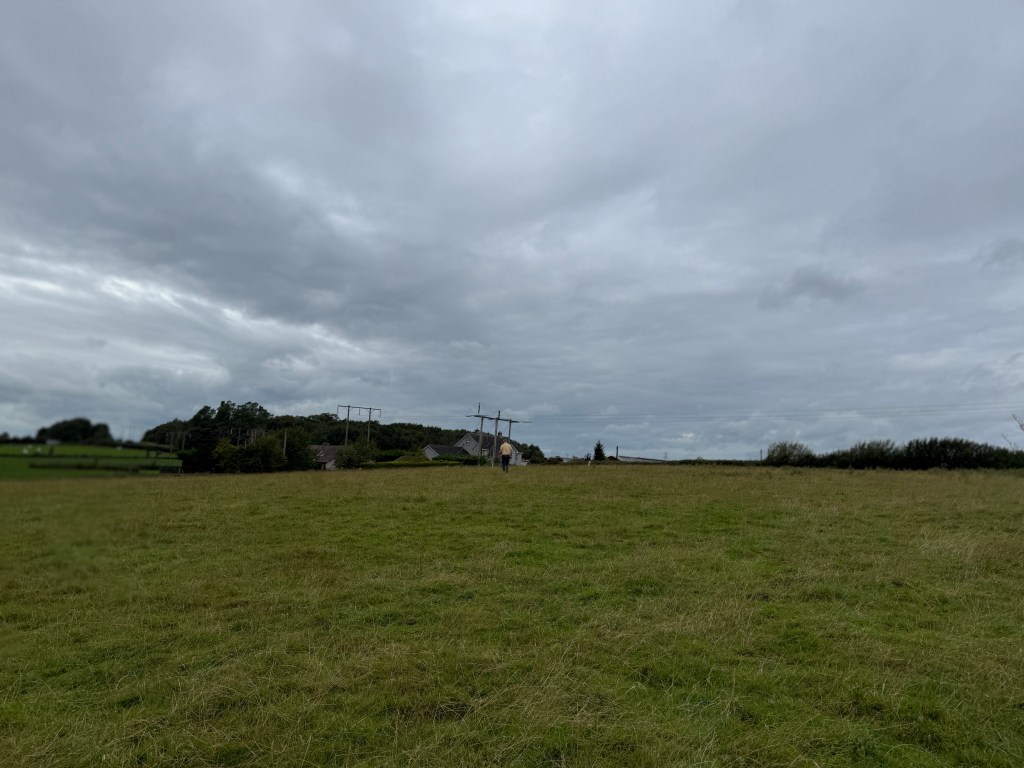
Movement shapes so much of our lives, even when we don’t notice it. We are always moving, and how we move shapes how we see the world. In the world today, we can travel the same distance but see radically different things: to walk a mile is to have time to take in the sights, sense the smells, and ponder all that you can see around you; to drive a mile is to whiz past and be more concerned about what is in front of us than around us. It is the same journey, on the same road, and radically different. That is something I have known for so long, but recently found myself experiencing it again for the first time when I was out for a walk around the city and suddenly found myself walking down paths and streets that I had seen, and yet not really seen – there I was taking in new buildings and new scenery that had been around me for years, but because I had been moving at speeds that did not allow me to see what was around me, and in such a way that I had to keep my eyes fixed forward – we are always moving. Still, the way we move changes our perception of the world and our experience of it. Is our journey of faith any different?
1.1Passage (Luke 9: 57-62)
57 As they were going along the road, someone said to him, ‘I will follow you wherever you go.’
58 And Jesus said to him, ‘Foxes have holes, and birds of the air have nests; but the Son of Man has nowhere to lay his head.’
59 To another he said, ‘Follow me.’ But he said, ‘Lord, first let me go and bury my father.’
60 But Jesus said to him, ‘Let the dead bury their own dead; but as for you, go and proclaim the kingdom of God.’
61 Another said, ‘I will follow you, Lord; but let me first say farewell to those at my home.’
62 Jesus said to him, ‘No one who puts a hand to the plough and looks back is fit for the kingdom of God.’
1.2 The Journey of Faith
One thing that always amazes me when I read the gospels is the pace of life. We join Jesus and the disciples as people always on the move – he has a mission to complete – yet the pace of their journey, because of the reality of the world, means that they can only move as far as their legs can take them on any given day. Jesus had a mission to fulfil, and he had places to be – yet the reality of the world around him meant that there could never be a rush! Did Jesus lose out on something because he did not arrive in places quicker? Did the people who were waiting for him lose interest because they had to wait too long? Or did the disciples miss out on more because it took Jesus longer to get somewhere? The Answer to all of those things is no. You see, when it comes to faith and following, it is not the destination that matters, but the in-between! It is the movement from one place to another that God will often do his greatest work; we see this so often in Scripture, whether it is the people of God who think they are lost in a desert place, or a people longing to return to their promised lands who assume God has forgotten – or twelve newly called disciples and a rambling crowd walking along the road with Jesus, not sure of what they have left or where they are going – it is in those in-between places where God will do his work and over the last few months as a church we have been thinking about our own journey that we are all apart of, even though it began long before us. A journey that has crossed over 9,100 Sundays and seen thousands of people in and out of the doors of this building, a journey that has moved forward through dark valleys and changing roads. We have been moving on this road of faith for nearly two hundred years, and yet we have never arrived anywhere, because we are never the destination; we are simply those whom God has entrusted with this mission and the facilities that enable us to walk with Jesus today and make him known.
I think sometimes the danger is that we look back at what was and think that is where we should be; as we walk forward with our necks cricked backwards, we lose sight of what is going around us and where God might be leading us. It is a beautiful thing to celebrate God’s faithfulness over the years. Still, while thanking God for his goodness, we must always avoid romanticising the past that we look back on, because we think the challenges we face are greater today than those faced by the people who walked before us – every generation has its in-between moments of uncertainty, rebuilding, change, loss, and opportunity. The people who walked before us faced rebuilding due to fires and German bombs, and they experienced the faithfulness of God in their movement forward, not just in settled moments. As we ponder what God’s faithfulness looks like today as we walk in the power of the Spirit in the way of Christ, we are reminded of the beauty of those in-between places in our passage today, which shows us we have a destination – but we are not it; God is! And in three encounters, Jesus shows us the call of Harvest as we walk with Christ today.
2. The First Encounter and the Road Ahead (57-58)
It is, in a way, the most normal of scenes right at the beginning of the public ministry of Jesus: he has just called his first disciples to follow him, and then fed a few thousand people as a sign of his God-given call and purpose; then he has listened to his disciples argue about notions of greatness and power in this new mission they have been given. This marks the beginning of something new, as a young teacher gathers people around him and teaches a message about God’s call. Thus, on this journey towards Jerusalem, with a growing movement, you would think that Jesus would have an earnest desire to add to his number the people following him – that is what we would all want, isn’t it? If you are launching something, then you want people to buy into it and get behind the cause.
If any of us were trying to start something new, and launch a new movement, we would be delighted to have someone come alongside us and say with such confidence, “I will follow you! Wherever you go!” Of course we would be delighted, because adding followers to our cause is the whole point! Dare we say that if we were so soon into launching something and someone appeared before us with such commitment, we might even feel good about ourselves. Yet, to this man’s confidence, Jesus almost seems unsure- dare we say even uncertain about it; it is almost like he tries to talk him out of it. Why? Because Jesus knows the realities of the journey ahead; this is not directionless wandering that leaves followers wondering. This unnamed man might have been enthusiastic, but enthusiasm is not the same as Discipleship. Jesus is not just heading to Jerusalem; he is heading to the cross: “When the days drew near for him to be taken up, he set his face to go to Jerusalem.” (9:51)
As we move through life, we become so obsessed with the world’s metrics that we begin to confuse them with the things of God. We judge our success through the lens of the world – numbers, finances, reach, and in today’s world, followers. Yet, faithfulness is not measured in visible output – and our call is to be faithful to the harvest like a farmer tending his land, even when we are unsure what Crop might be produced. You see, the farmer cannot manufacture the harvest; all he can do is be faithful in tending, sowing, working, waiting , but the growth is God’s. Yet, he gets on with the work without the assurance of the result. Numbers are not a sign of our success nor of God’s faithfulness to us; they can tell us something, but they do not tell us everything- true faith means grasping what it means to follow Christ to the Cross and do his work in the world and getting on with it anyway. Thus, to the one who declares he will follow Jesus anywhere, Jesus wants him to understand what following means: “Foxes have dens, birds have nests, but the Son of Man has nowhere that he can call his own.” What does Jesus really mean? Well, Eugene Peterson puts it simply: “Are you ready to rough it? We’re not staying in the best inns, you know.” The measure of our journey of faith is not that we gain the most followers, or grow to be the largest church; in this life of the harvest, it is knowing just what the journey will entail and delighting in it because we get to walk with Jesus because of what he has done for us.
3. The Second Encounter and the Things That Come First (59-60)
Enthusiasm is not a metric for good discipleship, and a growing following is not a sign of the Kingdom of God’s success. Thus, as one person comes before Jesus and offers his undying service and loyalty, Jesus warns him and all who are listening because following him means accepting his way of working in the world – the cross. And now, as Jesus and the disciples continue along the road, I wonder: did the disciples find themselves thinking about the man whom Jesus seemed to scare away? He wanted to join us, and Jesus did not seem to want him – Why? Now they get to witness another interaction between their new teacher and another potential follower – although this time it feels different. As Jesus looks upon someone and calls them in the same way he had called the other disciples: “Follow Me,” and where the twelve had left everything to follow Jesus, this unnamed person seems keen, but only when it suits him. He says, “Yes… but!”
God can do lots with our yes, but little without excuses. The man is keen to commit, but not right now, as he asked: “First, excuse me for a couple of days, please – I have to make arrangements for my father’s funeral.” God has called him, but he has things to do, or so it seems because, let’s be clear, this man’s father has probably not just passed away – because his family would then be in mourning, and the Son would already be involved with the funeral rites and thus not out on the streets where he could meet with Jesus.
This is a man who has met Jesus, heard his call on his life, and come up with the first excuse that could enter his head! “Yes, Lord, I will follow you, but give me a few days because I need to sort out the house!” Or “Yes, Lord, I will follow you, but could you give me a few months because there are things that I need to finish off”, or perhaps even worse: Yes, Jesus, I would be interested in following you, but first I want to live a little and have some fun, live a little and make memories, and then I will be your disciple.” The man has the opportunity of a lifetime, not the opportunity of an easy life, as the one who is life calls him into his presence, and he comes up with the most ridiculous excuse in a moment of almost humorous thinking. He wants to commit, but only when he is ready because indeed the delay that might be needed to sort out his father’s funeral and affairs could potentially run into years. Sounds ridiculous, doesn’t it, as we think about our own life and faith – who could reject such an offer to follow Jesus and serve in his Kingdom in such an obliviously ridiculous way? Yet, are we any better? Or, if I can be direct, are our excuses any less ridiculous in the face of the offer of life and the call to make life known? We might not be making excuses about following Jesus; we might even claim him as Lord of our lives, but when he asks us to do something, when his church needs us to get on with the work of the Kingdom, which is our spiritual harvest, then our excuses start to roll!
- “Me? Oh, I could never do that; I don’t have that gift!”
- “I would love to get more involved, but I just don’t have the time.”
- “I wish I could help on Sundays, but I am not great with public speaking!”
- “I would love to help at that, but it is during the caravan seasons”
- “I am too Young: I am too old”
- “We would love to do that, but the world is different now than it was one hundred years ago.
We might not pretend that we have a funeral to plan, but often in our life of faith and our call to live out the life of faith, the call of Jesus, and the way of the Kingdom, too often we are better at making excuses than getting on with the things God might be calling us to. We want all the benefits of faith without its call; we want the safety of salvation without the work of the Kingdom. What Jesus exposes here are often the misplaced priorities of the human heart when it comes to following and the work of the Kingdom in our place. These misplaced priorities are exposed in the excuses we make before God and one another. Jesus has no room for misplaced priorities, as his response shows what matters. It is not that Jesus is being cold to a grieving son, nor that he dismisses the demands and needs of family – he simply sees through the excuses of the Son who has either made up the lamest excuses, or is saying that will follow once he has the inheritance that is for him. Eugene Peterson puts it beautifully as he writes:
“Jesus refused. ‘First things first. Your business is life, not death. And life is urgent: Announce God’s kingdom!’”
I wonder what “first things first” means for us? For you? That is what this boils down to, because let’s be clear: Jesus is never saying that family doesn’t matter when it comes to the work of God, or that we cannot enjoy the things of this earth that God has given us. This is simple: the call of Christ cannot be pushed into tomorrow; it is too valuable to ignore endlessly, and the work too urgent for those who have called upon his name to be moved by the Spirit into it. The call to respond to the Cross is not a call for tomorrow, and if we have responded, the call of the Kingdom is not something we can delay until we feel comfortable. Faith leads to fruit, and a heart captured by the love of Christ moves us in the Spirit to make known the Cross through the abilities and gifts God has given us, and among the people God has given us. The harvest can never be gathered by a farmer who is waiting for the weather to be just right to begin, or for the conditions to be better to make the work easier: Nor can the harvest of the Kingdom and the mission of the Church be gathered in by disciples who are waiting for a time when the political culture is easier, their life is less busy, or their church has more resources; there are no better days or easier days in the Kingdom of God; there are only the days that God has given us. So what does first things first mean to us? What have we been saying “Not Yet” to before God when God has already said: “Follow Me!?”
4 The Third Encounter and The Danger of Looking Back (61-62)
One thing I always remember from trying to pass my driving test was the eight-second rule. Do you remember it? When you were in the car and driving along the road, make sure every eight seconds or so that you checked your wing mirrors and rearview mirror to make sure you were aware of your surroundings, and doing it in such a way that the driving tester knew you were doing it (without having to say “I am checking my mirrors!”). Part of moving forward is keeping an eye on where we have come from, because it gives us context for the journey. But what happens when we are on a journey and start to miss the place we left behind, and our gaze lingers too long in the rearview mirror? When we are walking, and our neck is cranked too far back on the road we have come from? Well, first our neck might hurt, and we can no longer move forward because we lose sight of where we are and the context through which we are walking. The longer our eyes linger backwards, the harder it becomes to be present and move forward. If you drive with your eyes in the rearview mirror, you will end up off the road, and if you are walking down a path with your neck cranked around, you will eventually walk into something! Life is moving forward whether we like it or not, and the life of faith is constantly moving forward, but that movement becomes difficult, almost stationary, when our necks are cranked. No one moves forward by looking back, and yet how often does our faith end up looking like someone walking into lampposts because their neck is cranked. We miss the present, and we lose sight of the future; we miss what God is doing in us and around us because we somehow think what was is better than what can be and what we are going to.
Jesus has had two interactions so far: in the first conversation, we saw enthusiasm for following without understanding the road ahead; in the second, we see someone who does understand the road and thus delays his obedience, and now we see following weighed down by “but.” As another one comes to Jesus and says:
“I’m ready to follow you, Master, but first excuse me while I get things straightened out at home.”
He thinks he is ready, but ultimately his answer proves that he is not because his mind is still concerned with things other than the call of God. He wants to follow, but he thinks the tasks on his to-do list are more urgent than the call of the Kingdom on his life, so he wants to head home and tick them off before doing the work of the Kingdom. Yet isn’t the problem that no matter what we do, there will always be something else that needs doing? Again, his desire to say goodbye to the family is not in itself a sign that someone’s faith is real; it is a hint at something deeper than Jesus gets right too – He wants to follow, but he does not want to let go of the things that gave him identity and purpose, and perhaps even comfort. Jesus knew his heart and his faith, and while it might seem harsh in the moment, he knew that if that man made that short trip down the road to say goodbye, it would be a far harder journey back toward the way of the Cross. It was family for him, but it could be anything for any disciple:
“I want to follow you, Lord, but first let me go and spend time with this person, first let me go out one more time with the group, or have one more experience of this event or that stuff.”
4 The Third Encounter and The Danger of Looking Back (61-62)
Thus, beautifully and simply using the image of a ploughman, Jesus rebukes distracted discipleship: You cannot plough a straight furrow by pushing a plough forward while looking backwards. Or to put it in the terms of our world today: you can’t get into a tractor, attach the plough and then create a straight furrow by spending the whole time looking in the opposite direction from the one you are driving. No disciple can follow Jesus forward in faith while constantly looking back towards what was and longing for it. We can give thanks for the past, but we cannot live in it. The day is the day God has given us, and no matter how it may feel compared to what has passed, God is as good today as he has ever been and desires to do the same things through his people.
Maybe that thought lingers in our minds in this week of all weeks, as we look back over 175 years and think of fuller churches, more resources, easier mission fields, and a different culture. We have looked backwards, and rightly so: We have given thanks for generations of faithfulness, for people who prayed, served, preached, gave, built, rebuilt and kept going through world wars, buildings destroyed and an ever-changing city. We have remembered fuller buildings and different days, seasons when the world around this church looked very different from the world around us now and seemed more secure to us as we look back. Yet, remembering is not the same as longing to go back down the road, and being a smaller church today is not evidence that God has abandoned us. It is not proof that our faith is weaker, nor that the Christians who went before us somehow lived in the golden age and we have been left with the scraps. This is simply the moment God has given us. This is the field he has placed us in. This is the road on which he has called us to walk, and it is our job to be faithful within the Spirit. So we look back to give thanks for those who walk before us and the foundation they have build for us – not to mourn endlessly for what was. We remember so that we might be inspired for this present as we walk into tomorrow and we straighten our necks, as we put our hands again to the plough together: look around at the people and possibilities God has placed before us, and ask not, “How do we get back to what we were?” but “Lord, what might you yet do among us, through us and around us if we keep walking forward with you?”
5 There is a Cost to Following
Isn’t that one of Scripture’s beauties? None of that pretends following Jesus is easy or offers the prosperous life. Jesus has made that painfully clear in every encounter on this road that there is a cost to discipleship because there was a cost to grace, and when the church loses its sense of that cost, everything stumbles. Dietrich Bonhoeffer, in the years before the rise of Nazi’s saw a church and a denomination that had grown weak and used to the comfort of culture and power, and spent his time warning against what he called cheap grace:
“Cheap grace is the grace we bestow on ourselves. Cheap grace is the preaching of forgiveness without requiring repentance, baptism without church discipline, Communion without confession…Cheap grace is grace without discipleship, grace without the cross, grace without Jesus Christ, living and incarnate.”
The grace that saves us is completely free to us, but it was never cheap; it cost Christ everything, and when that grace takes hold of us, it calls us to follow him. It is because we have grasped the worth of that Grace and the way it works in the world. That means here, in this place, among these streets, neighbours, families, students, children, lonely people, struggling people and people who may never think of walking through the doors of a church, we show the worth of Christ and his Grace and the power of the Cross because it has been shown to us, no matter our number. Our mission is not somewhere else, in another generation or in some imagined future when we have more people, more money or an easier culture. Our mission is here because Jesus has placed us here in this place, time and season. The cost is that we stop waiting for someone else, stop longing for another time, take up what God has placed in our hands and follow Christ into the harvest that is already around us. Grace is costly, but it is worth it:
>
”Costly grace is the treasure hidden in the field; for the sake of it a man will go and sell all that he has. It is the pearl of great price to buy, for which the merchant will sell all his goods. It is the kingly rule of Christ, for whose sake a man will pluck out the eye which causes him to stumble; it is the call of Jesus Christ at which the disciple leaves his nets and follows him. Costly grace is the gospel which must be sought again and again, the gift which must be asked for, the door at which a man must knock. Such grace is costly because it calls us to follow, and it is grace because it calls us to follow Jesus Christ. It is costly because it costs a man his life, and it is grace because it gives a man the only true life. It is costly because it condemns sin, and grace because it justifies the sinner. Above all, it is costly because it cost God the life of his Son: “ye were bought at a price,” and what has cost God much cannot be cheap for us. Above all, it is grace because God did not reckon his Son too dear a price to pay for our life, but delivered him up for us. Costly grace is the Incarnation of God.”
6 Are You Sure You Want This Harvest? (Conclusion)
Perhaps those listening to Jesus speak about the plough would have remembered another ploughman who made an impact for God? Centuries before, Elijah had found Elisha working the land behind his oxen, and when the call came, Elisha left the plough, sacrificed the oxen, fed the people and went after Elijah – he encountered God and heard the call to follow and could do nothing to resist it. There was no keeping one eye on the old life just in case the new one did not work out; the call of God moved him forward. You see, now one greater than Elijah stands on the road to Jerusalem and says: ”Follow me.” to all, and that is the strange challenge of Harvest and thanksgiving season in the life of the church – We look around and give thanks for everything God has provided, for the fruit that has grown, for the years that have passed, for this building, for this church family, for 175 years of grace upon grace. But that is not where we stay, because thanksgiving was never meant to leave us staring backwards with cranked necks. Thanksgiving reminds us that the God who provided yesterday is the God who provides today, and the God who will still be faithful tomorrow. – We give thanks so that the spirit might do his work again.
C.S. Lewis once described the faithful person as one who can return to “the patience or gratitude demanded by the moment that is passing over him.” And perhaps that is where Harvest leaves us today: not mourning yesterday, not frightened by tomorrow, but grateful and faithful at the place on the road in which we find ourselves, trusting God for the journey ahead. So let us straighten the neck and together take our eyes out of the rearview mirror and look around at the road and fields that God has placed before us. Let’s give thanks for everything that has brought us this far, and then live by their example no matter our number, size, or resources, because the same God who was at work then is moving us forward as we put our hands back on the plough. There is still seed to sow, there are still people to love, there is still good news to proclaim, and there is still a harvest that belongs to God. We have not arrived and we are not the destination – but we are heading in the right direction We are simply a people walking forward with Jesus, trusting that the God who has been faithful for 175 years will be faithful in every step still to come.


Leave a Reply