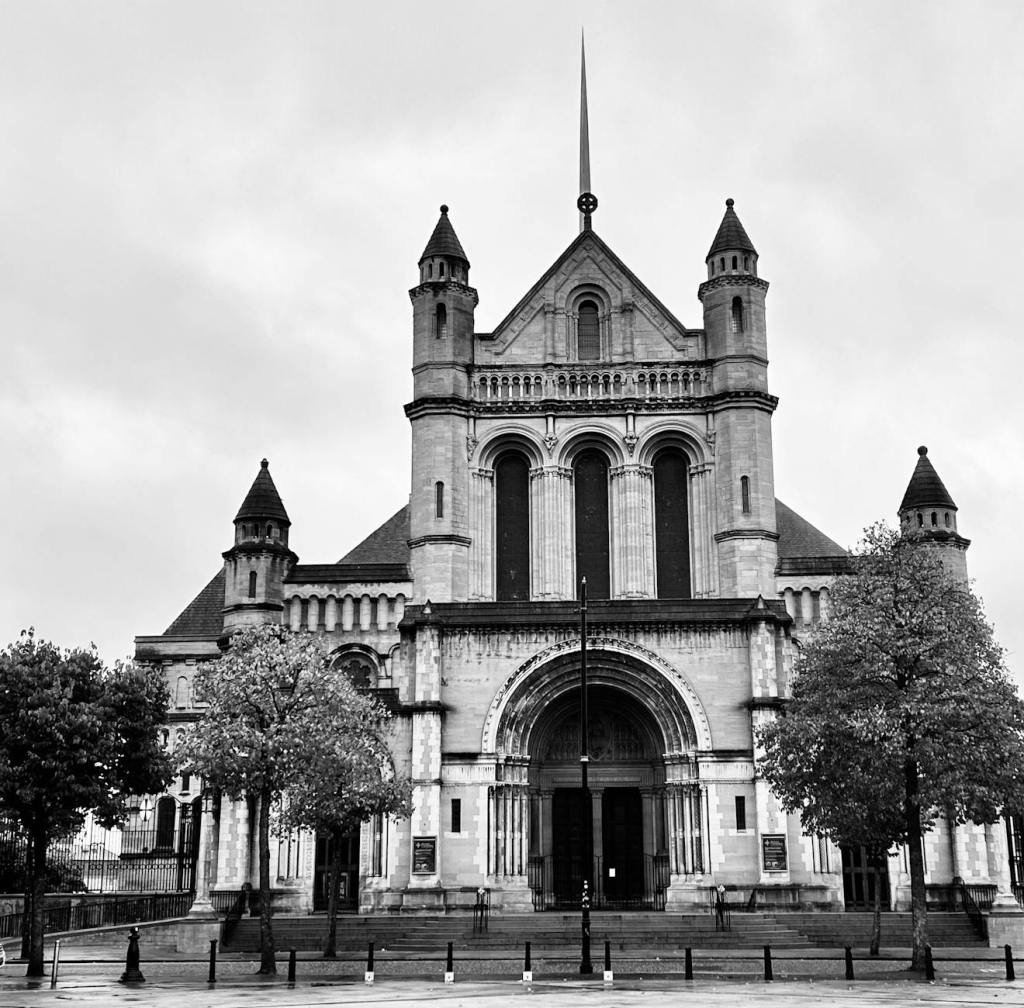
In The Waiting (Introduction)
The streets of our city get busier by the day, even as the darkness deepens and the temperature drops. There is more life about Belfast than ever before as we draw into the Christmas season. The shops are opening later as people rush through their shelves to find the right gift for the people in their lives, all while trying to remember the other bits and bobs they need for the season. Go into the city centre and sit down on one of the benches outside the city hall. You will experience the urgency and business that mark the build-up to Christmas as people buy presents or head out for Christmas dinners with family, friends, and colleagues. There is so much to see, and yet so much unseen. Among the people shopping are those waiting in queues, those eating in restaurants, those waiting to be seated, and all the hustle and bustle goes on, while the unseen wait in hope, despite their hopelessness. I find these moments hitting me more and more this Advent season, especially after we hosted the De Paul celebration of life this week and heard about their work and the challenges facing our city’s homeless community as they fight for hope and a better future. I think what has scared me is how often amid our busyness we choose to ignore it – in the days before we hosted that wonderful afternoon for the work of De Paul I was struck walking through Cathedral Quarter as I watched a group of friends come out of a restaurant and pose for a photo, as they smiled together they seemed almost oblivious to the sleeping bag behind them and the two people cuddling up in the corner of a door with their dog to the side of them. In the busyness of our lives, we can lose sight of the world we live in because we think we are a people moving forward in the race that is our life; sometimes, we even believe we are better than those around us. Yet, if we were willing to face the reality of our lives at times, we might be honest with ourselves: even though we are moving, we have no idea where we are going. We might be moving, but, like those we sometimes choose not to see, we too are waiting.
Waiting in an Instant Age
We live in the age of instant coffee, instant ink, instant printing, fast food, next-day delivery, and on and on our list could go. We live in an instant culture where we expect things as soon as we seek them, can watch something without waiting for the TV Schedule, and it has messed with our perception of the world. Why? Because we do not know what to do with “waiting.“ Last week, we saw how with John the Baptist, God speaks into the wilderness, and from our passage this week, we see beautifully that in our waiting in the wilderness, it is God who sustains us. Our city is one that, across its four corners, has known waiting in the worst of circumstances as people prayed to God for peace, change, forgiveness, healing, safe housing, and, above all, hope. Although Advent, as a season, is not something we see in Scripture, it is a season that helps us grasp the tension of discipleship and life in the Kingdom, marked by waiting, but not an idle waiting. No, because Advent reminds us that as we live between the two poles of Christ’s coming, it is in this waiting that our hope grows. Romans 15 helps us even more as we see something of the beauty of how by the truth of the Gospel god forms us for himself as a hopeful people because of Christ .
1 | A Hope That Lasts (15:4)
Hope is challenging because where we have placed our hope in the past, or where we are trying to put it right now, will shape how we understand and grasp it. The reality is that we have all found hope in something, or in something that has at some point let us down and disappointed us, and, with wisdom from experience, we have learned to be more cautious about what we hope in. Today, we often think of hope as something to feel in a moment, that sense of excitement when we fall in love, or the anticipation we think about something coming up. We root hope in our emotions and our experience of the world around us. The reality is that many of us here today will feel let down, that we have been disappointed too many times to have hope in anything or anyone. Our passage this morning reminds us that hope is never lost.
1.1 A Unique Hope
Paul makes clear to us what is unique about our hope in Christ above all the other misplaced hopes in the world: the fact that the root of our hope is not something emotional, temporal or material. No, the joy of Christian hope is that it is rooted in the revelation of God’s way from God’s word. Do you see the simple point that Paul points out right at the beginning, God’s words are written for an eternal purpose in every age – “all those words which were written long ago are meant to teach us today.” God’s word was written by God’s prophets both to reveal the Love of God and his redemptive plan, and to teach us, those seeking to live faithfully for Jesus, about the way of the Kingdom and our reason for hope. Notice firstly how Paul assumes that we are in the Scripture – “When you read Scripture…” (JB Philips) that we will be sustained on the Journey of faith by the example not just of Jesus, but through the lessons of waiting in Scripture. Why? Because the people of God knew what it was to wait for something: forty years in the Desert for the promised land, declared in exile, longing to return, and their most extended waiting and yearning – the messiah.
That is the teaching point that Paul is trying to make from Romans 15: that in the life of the disciples, when we read of the waiting that defined so much the life of faith, we begin to see that waiting is the way of Hope, because waiting is where God works. In this Advent season, as we look forward with expectation through the lens of this passage, we begin to realise that we are replicating the people of God’s longing throughout their lives, waiting for the messiah to come again. It is the Long wait of Israel in the Scriptures that teaches us how God works through in the waiting: He sustains us by his promises and hope through all the delays until it is fulfilled.
1.2 The Need of Hope in Our Time
In our city, hope can feel thin. Once, when the churches were full, we felt safe and secure, with people just coming to us rather than wanting us to go to them. Now, in this weary season, many of our brothers and sisters across the city are waiting to figure out the future of their places of worship. We might wonder if we will make it to 176 years. We are reminded of the God who works in our waiting between the Advents of his Son; we are reminded that we can have hope because God has not changed.
Our call in the waiting is not to idleness, nor to retreat into a corner and lock the door until the Lord comes in Glory, no our call in this city is to stand firm as we put on the armour of the Spirit and rise the sword that is the word of God and then move forward together and the power of the Spirit and in unison push back the spiritual darkness with the truth of Gods work, the way of God’s son, and our Hope in him becuase of the forgiveness of our sin by the Cross of his First coming, in the confidence of his second. Let’s be clear, then this morning, a fundamental truth not just of our waiting, but of our walking in faith every day of our lives. Gospel hope grows where the word of God roots itself.
We look across our streets and see so many homes waiting for work to be done on them, with their windows boarded up, their roofs falling off, some of the shopping units no better, and the streets we walk on can feel as tired as we do. The city looks like we think, as we wait for some sense of renewal – to see growth tangibly, to experience the healing among ourselves. Yet, what Paul speaks of here is that from the steadfastness and encouragement of the Scriptures, we might have Hope. Gospel hope is not always something tangible, but it is something we know as we, as disciples, root ourselves in the word of God, and we, as a church, root ourselves in the word of God to walk in the way of God.
2 A hope that Unites us by Christ (15:5-6)
I remember the first night I came along the road from my previous church to think and pray about coming to St Paul’s, it was the first time I had turned left at the end of the Westlink to come this way with any real sense of intention. Had I driven down the street before? Yes! But I had never been looking for something, never been trying to find a place to stop. It was the first time I began to realise how Belfast’s geography and architecture had been shaped to keep it apart. We live in a city that, over the years, has known nothing but division, isolation, and separation in its search for political causes and truths. Sadly, in the midst of that, sometimes the church has become divided in her own mission to build the kingdom (of God) and not a kingdom.
2.1 A Counter Cultural Sign of Hope
Yet, as we move into this second section of the passage, we are confounded with a profound truth about the witness of the church in the world. The church, by its own nature and makeup, is a constant counter-cultural sign of the gospel to a divided world and a dividing city. Why? Because where else would you find a place full of people held together not by political, personality, or power but by the saving Grace of Christ that we have freely accepted and know. The fact that we come here together in love, whether young or old, whether born down the road or around the world, is in itself a witness to the hope that is rooted in us from the Scripture because of what Christ has done. As we wait, we wait together for Christ. Our waiting in the unity of the Body is part of our witness in this world. Why? Because our unity is a gift from the God who gives us our enduring encouragement from his word. It is not something we choose; it comes from the work of the Spirit in our lives, who brings us together for Christ, by Christ, and who keeps us together.
Does that mean it is perfect and always easy? No, but it is always witnessing to the world searching for hope as we await the fulfilment of Hope. In the world today, people seek unity around different things and causes. The irony is that the things that people try to unite us around often end up dividing us – political causes, local identities, sports, organisations, shared experiences, all can be good things that bring some of us together, but often in so doing will leave other people out. Yet, as Paul prays here for unity of heart and a common cause in mind because of Christ, he also gives us a glimpse of what that Unity looks like in praxis. It is not that our unity means uniformity where we all dress the same, look the same, and sound the same. No, our unity is not uniformity; instead, it becomes our identity and existence as we are united in one mind and voice that, in the Spirit and by the way of Christ and in the fullness of our lives, glorifies God, the Father of our Lord Jesus Christ. In a city divided where hope is drowned out by noise, the Gospel brings us together to speak and sing as one of the hope of the Cross and the beauty of the Gospel between the Advents of the Lords coming.
2.2 What is it that Unites Us?
Our unity is the Glory of God; it is not political, it is not cultural, and it is not something that can fall apart when it has been achieved. Instead, Christian unity is what we call doxological. It is our cause in the praise of God because of what Christ has done, and in the Spirit, it is what we will spend eternity doing. Thus, our unity is our everyday life and the cause of gathering together to enjoy God and to make him known. By Grace we have been saved, which means nothing can take it from us if we have grasped it. Thus, if nothing can take our salvation, then nothing can take our unity in our common desire to worship God and make him known in our city. We are reminded today that a fractured city will hear the hope of God only when the people of God sing with one voice about what the Lord has done.
It is our common hope, endurance, and encouragement together that we can pick up our Cross daily to follow and live for him. That is to say, it is in our collective walking together along the road Christ has called us to walk in this city, in this time, that we will see our City renewed by the Hope we are witnessing to. Every day presents us with the opportunity to encounter someone who is searching for hope, and we know that Hope is the Cross. It is only by going out together, enduring together, and being encouraged together that we can see the Kingdom Grow and lives changed by the hope of this season. Why do we go? Is it because Christ commanded it in the great commission? No, we go because we want to, and in our love of God, we long to make him known in the simplest of ways; thus, we move forward in faith and mission.
2.3 The Witness of Hope
The great commission is not a command that we fulfil by duty; it is a natural outworking of our waiting together and, in our working together, our unity is formed. Gospel unity is formed on the frontline of faith, in the trenches, and our movement to push back the darkness that stalks our city. It is not formed in the comfort of closed buildings and churches that do not welcome. Thus, we are commended by Grace to move forward together even as we might tire from the challenge before us because we have hope that what God has begun he will see through. We are called to mission, not simply to survive in the hope that we might see better days; we are called to open doors and hearts that welcome, not merely doors left open. No, in this city marked by old wounds, Christ calls us by the Spirit to model a new way and his new story where our unity is not from this world, and because we strive to get on, and love one another as he has loved us. Paul makes clear this morning that our unity is a fruit of mission, and our gospel harmony will preach to a divided world.
3 A Hope That Welcomes us Calls us to Welcome One Another (15:7-12)
It is a beautiful picture of the fruit of the Cross as we wait together. Why? Because all who have come to know the power of the Gospel are all who have grasped that we cannot do it on our own strength, we cannot do it without God – We are sinners saved.. Thus, to grasp that is to stand equally alongside the Body of Christ across the ages, who also understood that we bring nothing to the table in our salvation – no position, possession, or power we might have matters before the Cross – yet, God accepts us because of what Christ has done. We are all equal before the Cross, and if we are all equal before it then we are all equal after it. Thus, the practical call in unity and worship that Paul gives in verse 7 reminds us that even though Grace unites us, we often have a choice to make: “Accept one another, then, just as Christ accepted you” and then we can get on with the work of Kingdom building as we wait. Our accepting of one another enables us “to bring praise to God.”. There is a choice to be made every day in the life of the Church, and that choice affects how we can approach God. By the Spirit, we are already united in mind and cause.
3.1 As Christ Has Welcomed Us: We Welcome One Another
Yet there is still something we must do: we must choose to love and to live with one another as Christ has accepted us. What are the parameters? People who have known Grace will show grace and live by Grace. It means forgiving when we have been hurt, bearing when we are frustrated, it means encouraging rather than grumbling, it means speaking truthfully with kindness rather than behind backs, and it means opening our mouths in prayer for one another rather than gossip. Unity is a given, but our acceptance of one another in that unity is a choice that we must make every day. And, it is a choice that directly affects our own approach and desire to bring praise to God. That’s why every time we come to the Lord’s table, we practice the peace, because we are showing our unity, love, and acceptance of one another by faith through Grace. Let’s be clear, this call to Welcome or accept one another is the hinge of the whole passage and should be the greatest challenge to each of us.
It should leave us pondering for the sake of the Glory of God, who do I need to treat better, and when might our behaviour and tongue be causing harm to the Body of Christ and the witness of the Cross. Why? Because if Jesus welcomes us by faith in our weakness, lostness, and sin – then who are we to ever think of ourselves better than another and to lack the welcome we have received. This call to Gospel welcome because of the Cross is to be modelled on the Cross; it is not some passive friendliness. No, it is radically costly hospitality that is displayed by open doors and open hearts as we move out into a city desperately in need of the hope of Christ, the Hope of Advent. All we do is marked by this welcome. Our services, our witness, our outreach activities like Drop-inn, bible study, the community carols that come up are all done in the Spirit of the Welcome we have received, because it brings Glory to God in a world that is isolated.
3.2 A Welcoming People are God’s People
Thus, Paul roots this Gospel welcome in the very Story of Israel and the promise that they received to go to the nations, as in verses 9 to 12, he quotes from the Old Testament four times. He does so to highlight one common word that rings four times: Gentiles, Gentiles, Gentiles, Gentiles. God always had a plan for the people of God to be among the people of the world, so that the people of the world might have witness to the wonder of God and come to know it. Paul’s quoting from the Old Testament shows us that, as Advent reminds us, we were never meant to be a Holy Huddle set apart from the people around us. No, we are to go to the nations and become the means by which God will gather the nations. Beautifully and locally, that means we go to our streets and be the means by which God seeks out the Lost, broken, and downtrodden and heals them with the Hope of Christ. A hope that we witness to by how we welcome those whom God is seeking. I am so thankful for the welcome I have known here, and I can say that it is something we do well. Yet, it is always something in the Spirit that we can seek to become better at. Why? Because a welcoming Church becomes a sign of a welcoming saviour; thus, when our doors fling open, the unexpected and the delight in it are true signs that the Kingdom is breaking in. Welcome might not be with just words, but it becomes a prophetic act in our city that is scarred by exclusion, suspicion and division, as we seek to build a Gospel community that divides all the lines that the world creates – culture, class, ethnicity, and history – we make hope visible.
4 The God of Hope Fills us to Overflow (15:13)
We make hope visible because God is doing something in us, so we can do something through. We make hope visible because God has made hope visible in us, and he does it in the usual way that God does – abundantly. Which we see so clearly in our final verse of this passage, which reminds us that Gospel hope is not something we work up from the inside in our strength. No! Gospel Hope in Christ and by Christ is something that God pursues lavishly upon each of us.
Do you notice here that there is no moralism from Paul; there is no “because Jesus has done, you must do.” No! Paul does not end this section with a command for us to try harder, feel more hopeful, or pretend that everything is fine. There is no call to anything but Prayer from Grace because of the beauty of Grace. Thus, Paul prays because of Grace, and his prayer is simple for hope from the God of hope.
4.1 Remember Where your Hope is From
Paul is reminding us why, as Christians, we can always have hope, because our hope is not from this world – it is from God, who is the source of all that is good, the source of hope, He is the well. Yahweh is the one who speaks hope into the wilderness as we wonder, who keeps us on the path and sustains us on the journey. The beauty of our part in this relationship is that it is modelled on the very thing that brings us into it: Grace. Thus, we do not have to strive or do; we give ourselves over to God in faith, by the Spirit, because of what Christ has done – we believe! Then as we trust Christ, as we take him at his word, and root ourselves in his revelation, as we lean the weight of our lives on what he has done and what he will do, God fills us with joy and peace, and abundant hope!. It is not the shallow happiness of a good day or something new in our lives; it is something far more profound, far more beautiful: that deep, settled joy that knows we are loved. Not the fragile peace that disappears with the next bill, but that deep, settled peace from faith in what Christ has done, and what he will do when he comes again.
Do you notice the scale of it? Paul is not simply talking about enough to suffice for the day or your life of faith. There is no sense of a God of Lack, who might give us just enough to get by. Paul’s prayer is rooted in his understanding of the nature of God – that we would abound in hope. In its essence, it is about overflow, of more than enough, like a cup filled to the brim that the water is running down the side; it is the image of something that cannot be contained. Thus, in our city that feels tired, and like many of us are running on empty, God’s desire for his church is that we would be so filled with that Spirit, and so overcome by his joy and peace that hope spills out of us into our streets and to the people whom we meet that desperately need it. Think about that for a moment in the context of our own place and time. That A congregation that is quietly, stubbornly hopeful in Christ when jobs are insecure, when buildings are tired, when futures feel uncertain, will not go unnoticed – it will shine the light of the Gospel amid a darkening darkness. If we are a people who keep coming back to the promises of God, who keep lifting their eyes to the coming King, who keep praying and serving and opening their doors because they believe that Jesus really is Lord, then we will make hope known. It becomes visible in how we speak, how we endure, and how we live out the mission. That is what it means to abound in hope. It is not that we never feel the weight of the wilderness, but that the wilderness does not get the last word in our faith and desire to be faithful.
4.2 A Strength of Hope that is not our Own
More gracious and beautiful still? What Paul reminds us is that none of it is in our strength, it is “by the power of the Holy Spirit.” The same Spirit who inspired is the revelation of God, the Same Spirit who empowered Christ in the wilderness, the Same Spirit that poured out upon the people of God at Pentecost, the same Spirit who unites us as one body, the same Spirit who enables us to welcome as we have been welcomed, now works in us to make hope real through us. He takes the truth of the Gospel and plants it into our tired hearts. He takes the promises of God and makes them feel real in boarded-up streets and struggling homes as we live boldly and confidently because of what Christ has done, determined to take up the sword of the Spirit and push back the kingdom of this world. He takes the future certainty of Christ’s return and lets its light dispel the darkness and doubts of our present. We are not left to ourselves. The God of hope has given us his Spirit. So as we wait in this city, in this season, we open our hands and ask the God of hope to do what only he can do. To fill us with his Spirit, to send us in his power, as we abound in Hope that will day by day and encounter by encounter begin to touch the wilderness we live in.
5 Hopeful Waiting in our Wilderness (Conclusion)
So what are we to do with all of this? With all that Paul has been saying to the Church in Rome, and us today, there is much to chew on, perhaps lots to put into practice, but the most beautiful thing, possibly, is that we are reminded that we do not wait alone. In our everyday faithfulness, living out the call of God in our lives using the gifts he has given us, we find peace and hope in knowing that we never do it alone. Those unseen acts of Kingdom living; serving in the church, unseen prayer for people we are worried about, those moments of telling someone our story, or checking in on them even when we are not sure they want us to – all that is done in the Kingdom is never done alone, it is done in the power of teh Spirit, in the way of Christ unto the Glory of God. As we wait for God, we wait with God; we wait as a people shaped by the Scriptures that steady us, united by and in Christ who holds us and will never let us go, and indwelt by the Spirit who strengthens us in the power of God that raised Christ from the dead! The wilderness around us may feel real, heavy, and unrelenting, as we feel the pressures of an area in decline and a people longing for hope: Yes, the darkness may feel great, but by Christ we know that our God is greater still! The people of God waited for centuries for the Messiah, learning slowly and painfully that waiting is not wasted time but the workshop of our faith and the place where hope becomes realised. The same God who sustained His people then by his presence and power is the same God who sustains us now, and will sustain us in the days to come. In faith and by the Spirit, as we walk with Jesus every day, we trust that in this in-between time, God is shaping a people who live differently in a weary world—a people marked by hope, who make known that hope.
When we have truly grasped this, then we realise how wonderful our waiting is! It is active preparation, the daily choosing to live as if Christ really is Lord of our lives today and could return at any moment. Last week, we heard the call to prepare the way; this week, Paul urges us to persevere in hope. Both are needed in our own hearts and on our streets. This City does not need a sentimental Christmas or a church that hides behind closed doors; it requires a people whose hopeful waiting becomes visible by word and in deed! A people who forgive when bitterness beckons, who welcome when suspicion rises, who reconcile when old wounds flare, who serve when convenience would rather we stayed home, and who speak truth when silence feels easier. These ordinary acts in the waiting become extraordinary signs of the Kingdom breaking in and the reign of God being established.
So we lift our eyes, not simply to remember where our hope comes from, but to live now in the light of what Christ has done, and we are sure what he will do again. Today, as the Church actively waits with a hope that refuses to bow to despair, we, by the very act of waiting, are pushing back the darkness. Why? Because this hope is nothing like what the world can offer. It is a hope that grows in the Word of God as he speaks to his people; a hope that is strengthened in unity as the Spirit deepens our relationships; It is a hope that overflows in welcome when the world seems like it is closing its door; It is a hope that the Spirit Himself ignites within us to shine the light of Christ through us. This is our witness in the wilderness: that even here, even now, the God of hope is at work. And because He is, we prepare the way, we persevere in hope, and we live as a people waiting well for the coming King, and until he does we continue to declare:
Christ has come.
Christ will come again.
And until He comes, we wait with hope.

 Atr Irwin
Leave a comment